This $650 Million Startup Is Building an AI That Can Improve Itself Forever
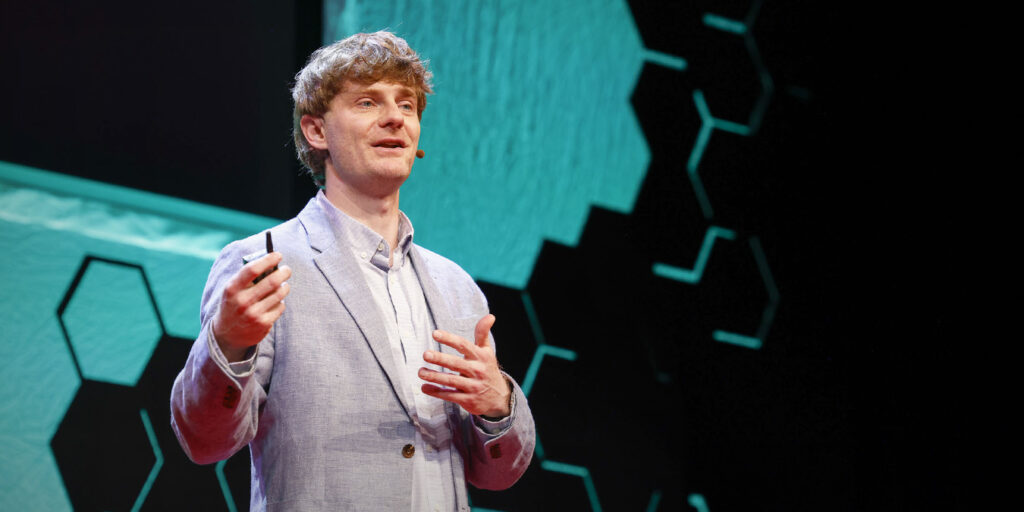
A bold new bet on recursive self-improving AI just came out of stealth with $650 million in the bank. The startup behind it is called Recursive Superintelligence, and it was co-founded by Richard Socher, the AI researcher and entrepreneur widely known for building You.com and for his foundational work on ImageNet.
Socher is joined by a heavyweight lineup that includes AI pioneer Peter Norvig, Cresta co-founder Tim Shi, and Tim Rocktäschel, who previously led open-endedness and self-improvement research teams at Google DeepMind and worked on the world model Genie 3. Together, they are chasing what many in the field consider the ultimate prize in artificial intelligence: a system that can identify its own weaknesses and redesign itself to fix them, without a human ever stepping in.
What sets their approach apart, according to Socher, is the concept of open-endedness. Rather than simply asking one AI to make another AI slightly better, which he describes as improvement rather than true recursion, the goal is to automate the full loop of ideation, implementation, and validation of research ideas entirely. The system would not just respond to prompts; it would evolve the way organisms adapt in nature, continuously and without a ceiling.
The startup points to a technique called rainbow teaming as an early signal of this direction. The concept, developed by Rocktäschel and now used across major labs, involves two AI systems co-evolving against each other. One constantly probes the other for weaknesses from multiple angles, and the target system becomes progressively harder to break. It is a concrete example of what recursive self-improving AI could look like in practice, even at an early stage.
Socher pushes back on the idea that Recursive Superintelligence is simply another neolab, a term that has come to describe AI research shops that prioritise publishing over shipping. He says the team has a track record of building real products, Josh Tobin, another co-founder, was among OpenAI’s earliest employees and later led its Codex and deep research teams and that the company’s first product will arrive in quarters, not years.
As for what happens when a truly recursive self-improving AI exists at scale, Socher frames it as a question of resource allocation. The real debate, he argues, will not be about capability but about priority: how much compute does humanity want to spend, and on which problems? Cancer or climate, one virus or another. That, he says, is where the conversation eventually leads.