Musk vs. Altman Trial Over OpenAI’s For-Profit Future Kicks Off — and the Stakes Are Enormous!
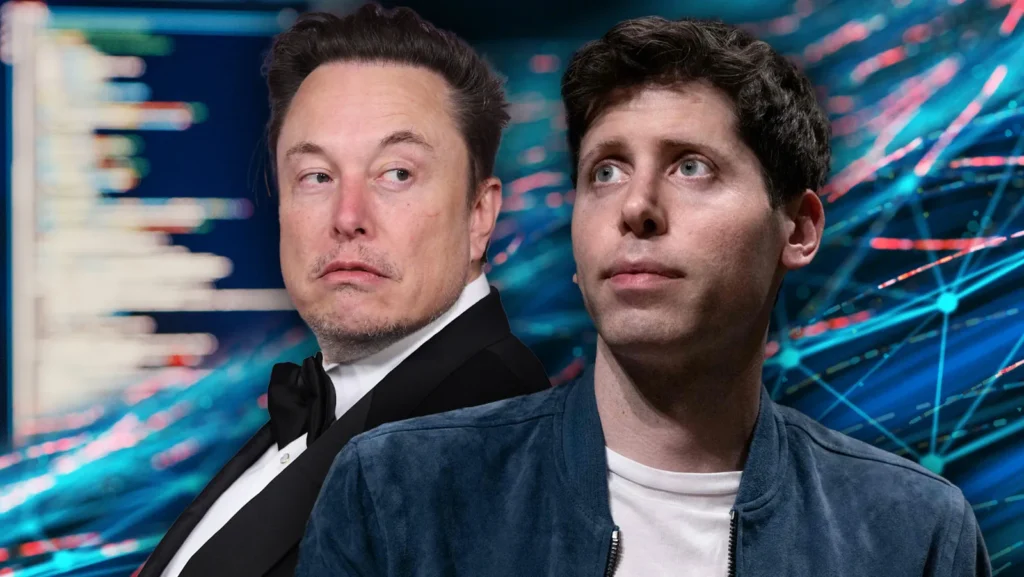
The Musk vs. Altman trial over OpenAI’s for-profit future is now underway in Northern California, and it may be one of the most consequential legal battles the tech world has ever seen. Ahead of OpenAI’s highly anticipated IPO, the court could rule on whether the company is allowed to exist as a for-profit enterprise and might even oust its current executive leadership, including CEO Sam Altman.
Musk is suing OpenAI, alleging that Altman and OpenAI president Greg Brockman deceived him into bankrolling the company in its early days by promising to maintain it as a nonprofit dedicated to developing AI that benefits humanity, only to later restructure the company to operate a for-profit subsidiary. Musk co-founded OpenAI with Altman and others in 2015, but left in 2018 after a bitter power struggle.
Musk is seeking as much as $134 billion in damages from OpenAI and Microsoft, one of OpenAI’s biggest financial backers. He is also asking the court to remove Altman and Brockman from their roles and to restore OpenAI as a nonprofit.
The courtroom drama promises to be explosive. Musk, Altman, and Brockman will take the stand, alongside former OpenAI chief scientist Ilya Sutskever, former OpenAI CTO Mira Murati, and Microsoft CEO Satya Nadella. Cringey texts, raw diary entries, and accounts of scheming behind the founding and growth of OpenAI are expected to come to light.
At the heart of the dispute is a question of broken promises. When OpenAI was originally founded as a nonprofit, backed by a $38 million donation from Musk, the company vowed to create open-source technology for the public’s benefit, unconstrained by a need to generate financial returns. But over the years, the company began to claim that intensifying competition made sharing its AI development process dangerous, and that a nonprofit structure could not raise enough money to keep building AI.
The court has already found that in 2017, Altman and Brockman wanted to establish a for-profit arm, while Musk proposed merging OpenAI with Tesla. When Musk threatened to stop funding, Altman and Brockman told him they were committed to keeping the company a nonprofit. OpenAI, for its part, maintains that Musk himself agreed the company needed a for-profit entity and even wanted to be its CEO.
Legal experts are divided on whether Musk even has standing to bring this case. Some legal scholars are puzzled over why the judge allowed him to bring this claim, noting that it is typically the role of attorneys general not former donors or board members to enforce charitable purposes. Indeed, California’s attorney general declined to join Musk’s lawsuit, saying the office did not see how his action serves the public interest. technologyreviewtechnologyreview
The stakes for the AI industry could not be higher. OpenAI, valued at over $850 billion, has described the litigation with Musk as a potential risk to its business. Musk’s rival company xAI, which makes the chatbot Grok, is expected to go public as part of his rocket company SpaceX as early as June. If Musk prevails, xAI valued at $1.25 trillion in combination with SpaceX, could gain a significant advantage in the AI race. technologyreviewtechnologyreview
OpenAI has not softened its tone, calling the lawsuit “a baseless and jealous bid to derail a competitor.” Musk, equally unrestrained, has posted on X that “Scam Altman lies as easily as he breathes.”
The Musk vs. Altman trial over OpenAI’s for-profit future is set to pull back the curtain on an industry that has, until now, operated largely in the shadows and whatever the verdict, the AI world will not look the same afterward.