Google Releases a Free AI Dictation App That Cleans Up Your Speech Automatically.
Quick Reads
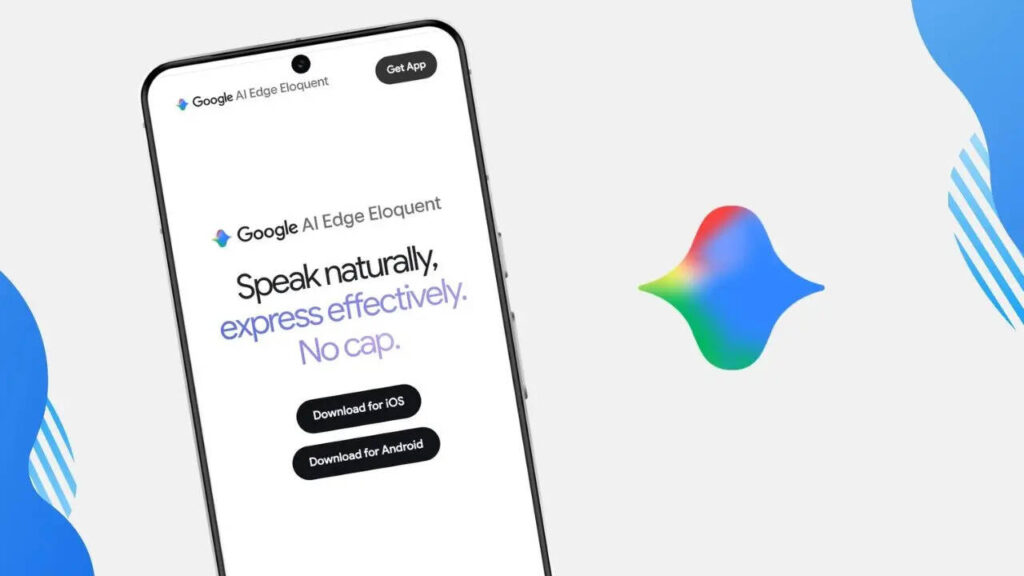
- Google released a free AI dictation app called Google AI Edge Eloquent on the iOS App Store on April 6, 2026, with no public announcement.
- The app transcribes speech in real time and automatically removes filler words like “um” and “ah” to produce clean, polished text.
- It runs on Gemma, Google’s lightweight AI model, so all processing happens entirely on your phone without an internet connection.
- A fully offline mode keeps your voice data on your device only; an optional cloud mode uses Google’s Gemini AI for more advanced text cleanup.
- The app is currently iOS-only, though Google’s own App Store description references a future Android version.
Offline Gemma transcription with instant cleanup.
The app is free to download, and once its Gemma-based automatic speech recognition models are downloaded, you can start dictating on your phone. Gemma is Google’s family of lightweight, open AI models designed to run directly on a device rather than requiring a constant connection to a remote server. Think of it as a small but capable AI engine living inside your phone.
When you hit pause, the app automatically filters out filler words and polishes the text. Below the transcript are options like “Key points,” “Formal,” “Short,” and “Long” to transform the text. So if you dictated a rough set of thoughts for a meeting, you could turn that into a formal summary or a tight bullet list in one tap.
In fully offline mode, all audio stays on the device and is processed by the Gemma-based model locally; nothing is sent to a server. In cloud mode, the speech recognition still begins on-device, but Gemini models handle the text cleanup in the cloud. Users choose which they prefer.
Users can manually add names or technical jargon to improve transcription accuracy for domain-specific vocabulary. Optionally, users who sign in with a Google Account can allow Eloquent to import frequently used words from their recently sent Gmail messages, building a vocabulary profile without requiring any deliberate configuration.
One notable limitation: the app is available in English only in most regions. Availability in the UK, Switzerland, and the EEA is currently restricted due to regulatory approval requirements, with Google saying it is actively working towards approvals to expand to these areas.
The iOS release before Android is an unusual move for Google. Android is Google’s own platform; it is where Google typically demonstrates new capabilities first. The fact that it launched on Apple’s platform first quietly, with no fanfare suggests this is still an experiment rather than a finished consumer product.