India’s First GenAI Unicorn Krutrim Is Giving Up on AI Models and Going All In on Cloud
India’s first GenAI unicorn, Krutrim, has quietly abandoned its original mission of building competitive AI models and is now pivoting to cloud services, in what marks one of the most telling retreats in India’s homegrown AI race.
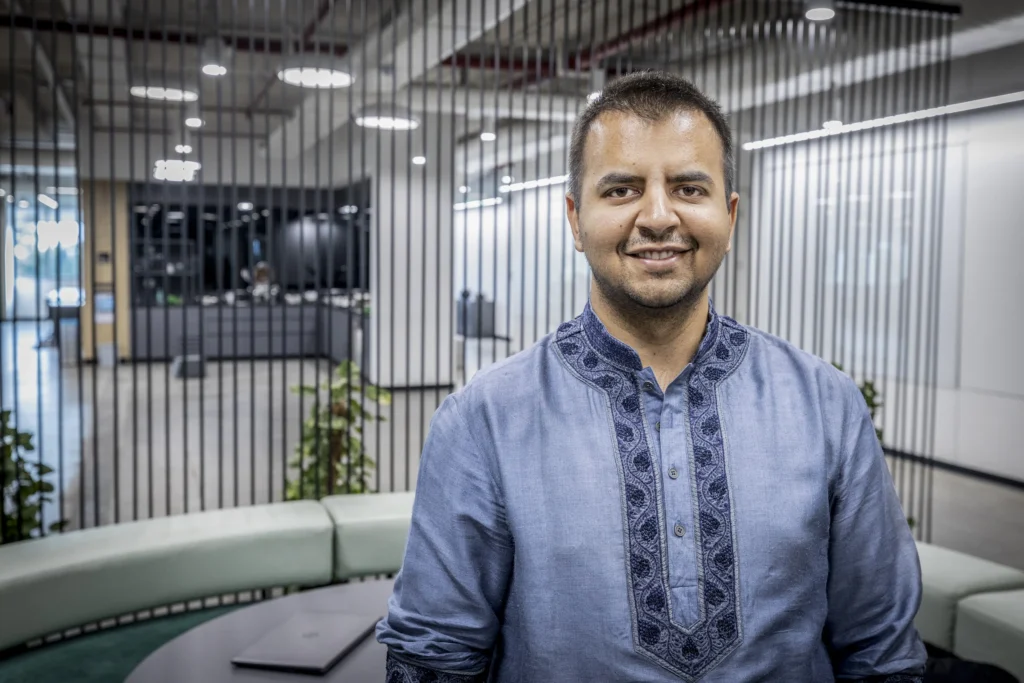
The Bengaluru startup, founded by Ola and Ola Electric chief Bhavish Aggarwal, announced the shift on Tuesday. The move follows a sweeping business overhaul in late 2025 that saw the company reallocate capital, pause its chip design efforts, and cut talent across multiple teams. The Krutrim India GenAI unicorn cloud pivot comes more than a year after the company released its Krutrim-2 base model, a launch that briefly stirred excitement around India’s potential to build its own frontier AI.
Since then, the signs of strain have been hard to miss. Krutrim’s last post on X dates back to December, and the company was absent from India’s AI Impact Summit in New Delhi earlier this year, where global players including Anthropic, Google, and OpenAI took the stage. Rival Sarvam, by contrast, participated in multiple sessions, unveiled new open-source models, and announced hardware and commercial deals. The contrast was stark.
The Krutrim India GenAI unicorn cloud pivot comes on the heels of over 200 job cuts across multiple rounds of layoffs, and the removal of its Kruti AI assistant app from app stores in April, signalling that consumer-facing AI was no longer part of the plan.
Krutrim had raised $50 million at a $1 billion valuation in January 2024, riding a wave of investor enthusiasm for India’s ambitions to rival the likes of OpenAI and xAI domestically. Those ambitions now appear to have softened significantly. The company said it posted roughly ₹3 billion (approximately $31.52 million) in revenue for financial year 2026, triple the prior year’s figure, along with its first annual net profit and margins above 10%. But it declined to break down how much of that revenue came from external customers, a significant question given that earlier reports suggested around 90% of its FY25 revenue flowed from within the Ola group.
On the cloud side, Krutrim says it now serves more than 25 enterprise customers across telecom, financial services, and healthcare, with most of its GPU compute already committed to external workloads. Sanchit Vir Gogia, chief analyst at Greyhound Research, told TechCrunch the cloud direction was commercially sensible, though he was measured in his assessment of the profitability claims, noting that the standard of proof must rise with the claim.
For now, the Krutrim India GenAI unicorn cloud pivot reflects a broader truth settling across India’s AI landscape: building large-scale AI models is brutally expensive, and infrastructure may be the more pragmatic path forward, even if the dream of a home-grown frontier model has not been fully abandoned.