Iran Threatens Fees on Undersea Internet Cables Targeting Big Tech
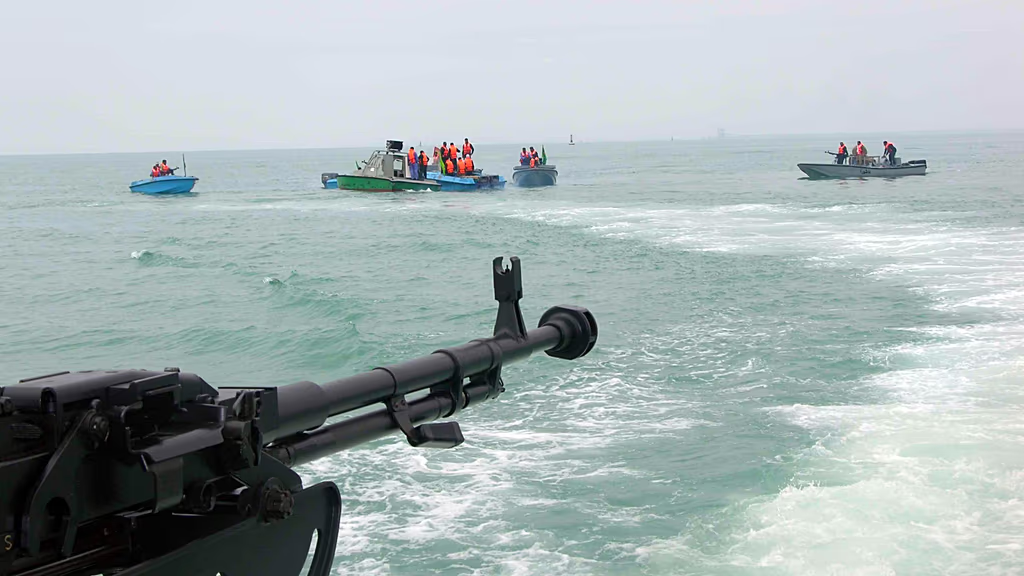
The Strait of Hormuz has always been an energy chokepoint. Now it is becoming a digital one too. Iran is demanding fees from the world’s largest tech companies for the undersea internet cables that run beneath the Strait. The war that began on February 28 has already disrupted shipping and energy markets. Iran now wants a piece of the global internet, too.
Iranian lawmakers discussed the plan last week. IRGC-linked media pushed it publicly. Iranian military spokesperson Ebrahim Zolfaghari posted on X: “We will impose fees on internet cables.” Iran’s Revolutionary Guards-linked media outlets said companies such as Google, Microsoft, Meta, and Amazon would need to comply with Iranian law.
Submarine cable companies would pay licensing fees for the passage of their cables. Repair and maintenance rights would go exclusively to Iranian firms. Mostafa Taheri, a member of Iran’s parliamentary Industries Commission, put potential revenues at up to $15 billion.
Iran Undersea Cable Fees: The Legal Reality
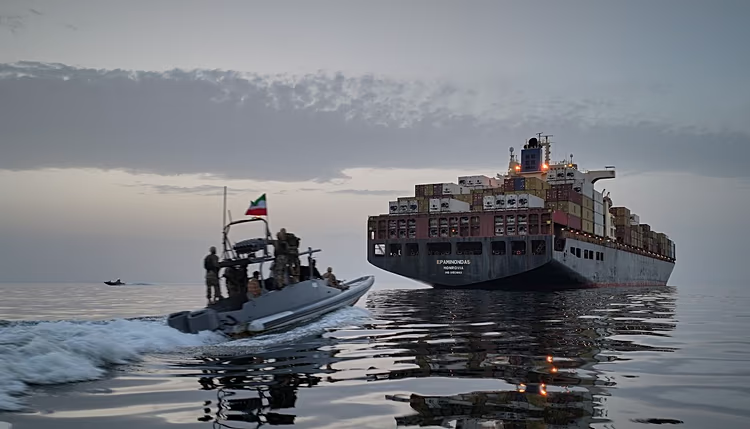
The legal basis for these demands is disputed. Iranian outlets cite the UN Convention on the Law of the Sea, arguing the strait’s narrow geography places its seabed under Iranian and Omani jurisdiction. However, UNCLOS includes a transit passage principle that protects the uninterrupted flow of international navigation and communications. Iran has signed UNCLOS but never ratified it.
Any attempt to impose fees or monitor cables would face immediate international legal and political resistance. However, legal weakness has not stopped Iran from disrupting shipping. Iran effectively closed the Strait to commercial shipping when the war began on February 28, with energy prices skyrocketing. A ceasefire has been in place since April 8 but remains fragile.
Why This Matters for Global Internet
“The Strait of Hormuz is not just an energy chokepoint. It is one of the world’s most critical digital bottlenecks,” says Mostafa Ahmed, a senior researcher at the Al Habtoor Research Centre. The United Nations’ agency for digital technologies estimates that 99% of international internet traffic is transmitted by undersea cables. Disruptions could slow or interrupt internet services and affect military communications, financial transactions, cloud computing, and digital services like e-commerce, streaming, and online gaming.
Tasnim claimed at least seven major communication cables serving Gulf countries pass through the strait, including the FALCON, GBI, and Gulf-TGN systems, which connect data centres across Asia, Europe, and the Middle East. Big Tech and Gulf states are now accelerating efforts to route cables away from the Strait altogether.