AI Robot IVF Gene Editing Future Is Closer Than You Think

IVF has been changing lives for over four decades. However, a new wave of AI, robotics, and gene editing is about to transform it in ways that raise equal parts hope and ethical alarm.
Technologies designed to standardise treatment, eliminate human error, boost success rates, and make IVF more accessible are already beginning to usher in a new era for assisted reproduction. One aided by AI and robots.
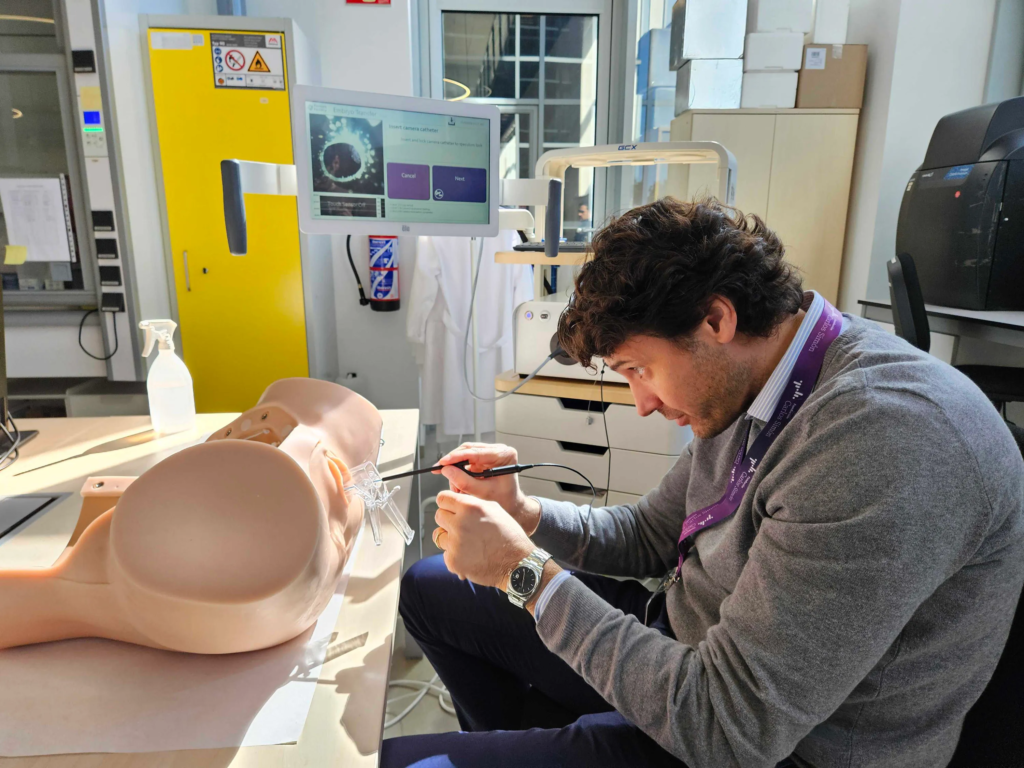
Some of those technologies already exist in clinical settings. Some of those technologies are being developed at the Carlos Simon Foundation in Valencia, Spain. When MIT Technology Review visited in March, researchers gave a tour of the labs and showed a device used to keep a human uterus alive outside the body for the first time.
In addition, researchers are using AI to identify promising sperm and embryos. They are also developing robotic systems that could automate parts of the IVF process.
Embryologists face a fundamental knowledge gap. Reproduction is complex, and there is a lot that embryologists and gynaecologists still do not know and cannot control. They do not know why many healthy-looking embryos do not “stick” in the uterus, for example.
However, genetic testing is already closing that gap. The most commonly used test is called PGT-A, which stands for preimplantation genetic testing for aneuploidy. Embryos with chromosomal abnormalities are more likely to be lost through miscarriage or potentially develop into babies with genetic conditions.
As a result, the impact is measurable. “You start to see an improvement: more babies and fewer miscarriages,” says Alan Penzias, a reproductive endocrinologist at Boston IVF. “The tests can shorten the time to pregnancy.” Microsoft
Where Gene Editing Takes the AI Robot IVF Story Next
The most controversial frontier is gene editing. In theory, even small genetic tweaks could create people who never get heart disease or Alzheimer’s, and who would pass those traits on to their own offspring.
At least one US startup is already pursuing this. According to one founder, if the technique proves safe, “it could become one of the most important health technologies of our time.” He estimated that editing an embryo would cost only about $5,000.
Therefore, the AI robot IVF gene editing future is not science fiction. It is a clinical, ethical, and regulatory conversation happening right now. How far medicine should go is the question nobody has fully answered yet.