More Than 150,000 Retail Investors Join Robinhood Venture Fund IPO, Says CEO
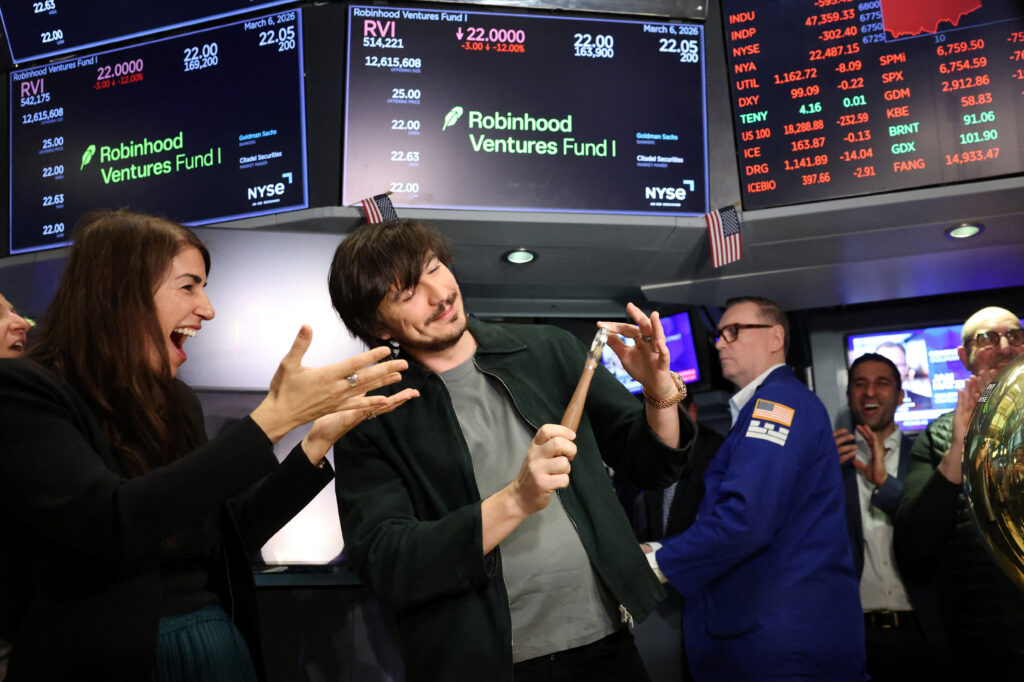
Robinhood is making good on its promise to democratize investing, and the numbers are backing it up. CEO Vlad Tenev revealed this week that the company’s Robinhood Venture Fund IPO drew over 150,000 retail investors when it debuted on the New York Stock Exchange, a figure he described as “quite democratized.”
Speaking at The Wall Street Journal’s Future of Everything conference, Tenev laid out the thinking behind Ventures Fund I, a publicly traded fund that gives everyday investors exposure to private tech companies like OpenAI, Stripe, Databricks, Oura, Ramp, Mercor, and Airwallex, all before any of them go public.
The fund launched in March and has since added OpenAI to its holdings, a company currently raising capital at a valuation north of $850 billion. Anthropic, another AI giant, is reportedly targeting a valuation close to $900 billion. These are the companies Tenev has started calling “frontier companies”, a new label for private firms that have grown so large the word “unicorn” no longer fits.
The Robinhood Venture Fund IPO is structured unlike a traditional venture capital fund. There is no carry, meaning Robinhood doesn’t pocket 20% of investor profits the way conventional VC fund managers typically would. Investors pay only a competitive management fee, and there are no accreditation requirements to participate. The fund also offers daily liquidity, which is a major departure from how private market investing has historically worked.
Tenev’s pitch is straightforward: as more high-growth companies choose to stay private longer, retail investors are being locked out of the most lucrative phase of their growth. The Robinhood Venture Fund IPO is designed to close that gap. “There are private companies that are raising capital at valuations in the high hundreds of billions,” Tenev said. “You’re going to see, perhaps, multiple private companies getting into the trillions in valuation before the IPO, before retail investors can participate.”
His long-term vision goes even further. Tenev says he wants retail investors to eventually get in at the seed and Series A stages, not just the later rounds that are increasingly resembling pre-IPO public offerings in all but name. That would mark a fundamental shift in how startup capital is raised, and whether Robinhood can pull it off remains to be seen. But with 150,000 investors signing up for the first fund, the demand is clearly there.