Bitget Launches QR Code Payments to Power Everyday Transactions, Eyes 2.2 Billion Global Users
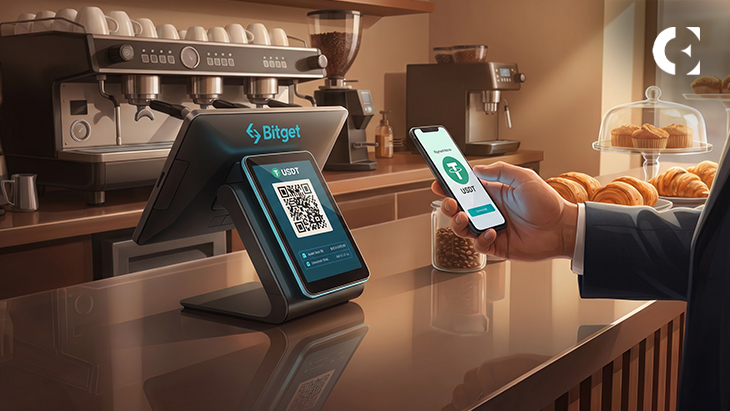
Crypto just got a lot more useful at your local market. Bitget, which describes itself as the world’s largest Universal Exchange (UEX), has launched a new Scan to Pay feature on its Bitget Pay platform, enabling users to make purchases at physical merchants simply by scanning a QR code through the Bitget App and paying directly in USDT.
The Bitget QR-based payments feature went live on May 6, 2026, initially rolling out across selected markets in Southeast Asia and Latin America, two regions where QR code payments are already deeply embedded in daily commerce, but where access to traditional banking services remains a real challenge for millions of people.
The mechanics are straightforward. A user sets a payment PIN, opens the Bitget App, scans a merchant’s existing QR code, and the transaction completes instantly. USDT is converted and settled behind the scenes, meaning merchants don’t need to touch crypto or update their hardware to accept it. For buyers, the experience mirrors familiar mobile payment flows they already use. For sellers, it is business as usual, without the volatility risk.
That simplicity is the point. According to World Bank data, billions of adults globally remain underbanked despite widespread access to mobile payment systems. Meanwhile, crypto adoption in Asia-Pacific and Latin America has surged, driven largely by demand for stable, accessible financial tools. Bitget’s move targets exactly that gap, people who already have smartphones and QR payment habits, but lack the bank infrastructure to move money easily.
Bitget CEO Gracy Chen put it plainly: “QR code payments have strong real-life usage, with over 2.2 billion people using them globally. There’s no reason why crypto shouldn’t be a part of it. It naturally fits into how people live and spend.”
The Bitget QR-based payments launch is part of a wider strategic shift the company is making toward what it calls the UEX model, a single environment that brings together trading, asset management, and everyday financial services. In that framing, Scan to Pay is not just a payment feature; it is an attempt to turn a crypto wallet into the kind of tool you’d reach for at a convenience store, a restaurant, or a street stall. For frequent travellers and cross-border users, it also removes the need to depend on local banking systems or pay conversion fees.
The rollout reflects a broader trend in the crypto industry, where stablecoins are steadily moving from trading pairs to actual payment rails. For Bitget, enabling USDT to function as spending money, rather than just something you hold, represents a meaningful step in its ambition to blur the line between a digital asset exchange and an everyday financial platform.