Postman MCP API Automation Now Covers the Full Lifecycle
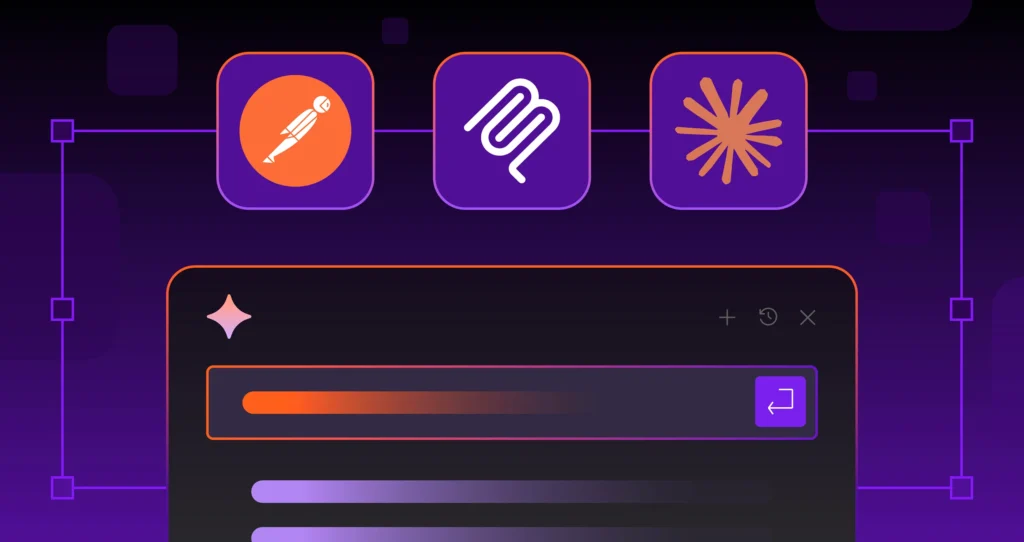
Postman MCP API automation has arrived, and it covers the entire API lifecycle. Postman has rolled out full support for the Model Context Protocol (MCP), introducing a dedicated MCP server that lets AI agents handle everything from spec creation to testing, code generation, and deployment.
The Postman MCP server enables AI agents like Claude, Cursor, and VS Code to manage Postman resources, workspaces, collections, specifications, mocks, and monitors. It translates natural language commands into API workflows behind the scenes. Developers simply describe what they need, and the AI agent does the work.
This marks a significant shift in how API workflows operate. Rather than switching between tools and manually triggering tests, teams can now instruct an AI agent to handle those steps programmatically, and headlessly. Newman, Postman’s command-line Collection Runner, powers this headless layer. It runs and tests a Postman Collection directly from the command line, without the GUI. As a result, it fits naturally into CI/CD pipelines and headless environments like servers or Docker containers.
The Postman MCP server builds directly on Newman. It uses Newman under the hood to execute Postman collections, so all collection scripts, tests, and variables stay fully supported. Nothing breaks when moving from manual to automated execution.
Beyond testing, the release also brings broader workflow control. Developers can create and send MCP requests using the familiar Postman API client, then generate MCP servers from a network of 100,000 APIs. Calling a tool, composing a prompt, exploring a server’s resources, or building a custom server, all of it works inside Postman with no extra setup and no guesswork.
Postman also launched an AI Tool Builder alongside the MCP server. It generates MCP servers that include only the tools an application actually needs, built on Postman’s network of verified public APIs, including Salesforce, UPS, and X.
Three tool configurations cover different use cases. Minimal mode offers fast, lightweight access for basic operations like managing collections, workspaces, or environments. Full mode unlocks over 100 Postman API tools for enterprise collaboration and advanced automation. Code mode targets teams that need to search API definitions and generate client code directly.
Security requires no extra work either. Communication between the Postman API and AI agents runs over HTTPS, with no additional setup on the agent side. A local option via stdio is also available for teams that need it.
Once connected, AI agents browse collections, execute requests, run test scripts, and switch between dev, staging, and production environments. Collections stop being static documentation. They become live, executable tools an AI can act on.
The integration also extends to Google’s Antigravity IDE. When the Postman MCP server starts, it reads the connected workspace and exposes collections as callable tools. Each request becomes an action. Antigravity’s agent holds that context persistently across sessions, it never starts from scratch on a new task.
Every MCP request can also be saved, reused, shared, and documented, just like any other request type in Postman. Teams can collaborate, test ideas, or fold MCP directly into automated workflows with minimal friction.
For teams building and scaling APIs, Postman MCP API automation means fewer manual handoffs, faster CI/CD cycles, and AI agents that execute against live API surfaces, not just describe them.