New Relic Service Graph Connector for ServiceNow Powers Autonomous IT
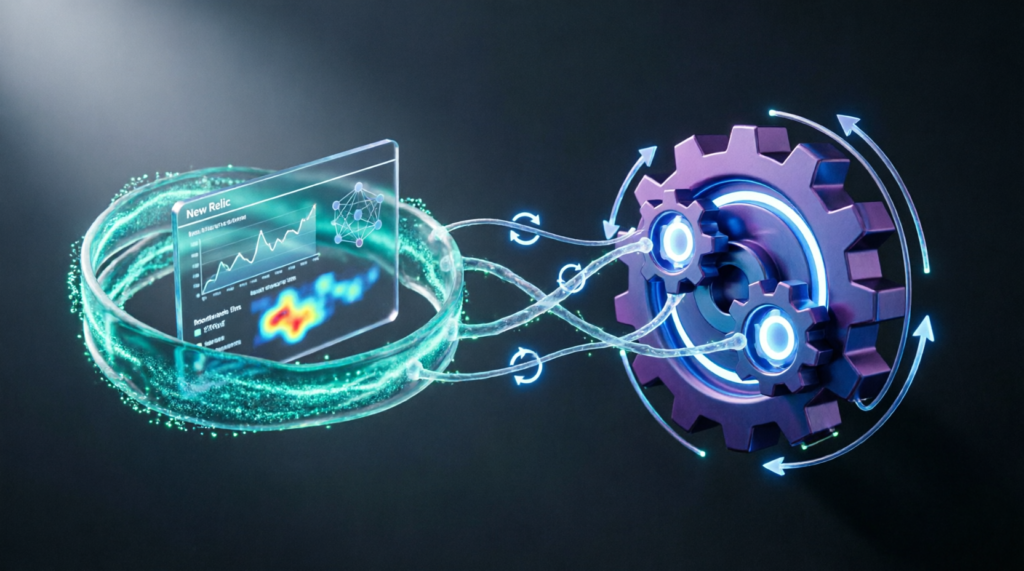
The New Relic Service Graph Connector for ServiceNow is solving a problem that quietly blocks most autonomous IT ambitions, bad data. ServiceNow recently launched its Autonomous Workforce, and one number turned heads immediately. 90% of internal IT requests are resolved without human involvement. That figure sounds almost too good to trust. Yet the real question is not whether the AI is capable. It is whether the data it reasons from is accurate enough to act on.
That is exactly where the New Relic Service Graph Connector for ServiceNow steps in.
Modern infrastructure does not stand still. Dependencies shift with every deployment. Furthermore, topology reshapes with every autoscaling event. As a result, manual discovery and periodic sync simply cannot keep pace. So when an AI specialist needs to act, its map of the environment may already be wrong, and an outdated map leads to fast guesses at scale, not intelligent decisions.
The connector addresses this gap directly. First, it continuously pulls live entity data from New Relic into ServiceNow’s CMDB as Configuration Item records. Consequently, the service model always reflects what is actually running in production. Second, it routes New Relic alerts into ServiceNow, already tied to the correct CI records. Most alert integrations fire a notification and stop there. This connector goes further, it links the alert directly to enriched CI data, so ServiceNow already knows what is affected and what depends on it.
The connector has also grown in scope. It now includes service-to-service relationship mapping, host-to-application relationships, and broader application data coverage. That means the dependency graph the AI specialist reasons from becomes more complete with every update.
Beyond the connector itself, New Relic and ServiceNow are building toward agent-to-agent capabilities. These enable AI to assess incident severity, identify affected services, and route to the right owners, all without waiting on human triage. Moreover, teams in financial services and healthcare are already running this in production, which signals real-world confidence in high-stakes environments.
The math is blunt. Ninety minutes of human investigation versus forty seconds of autonomous reasoning. That gap only closes when the underlying data foundation is trustworthy. A relationship between authentication and payment processing cannot live in an engineer’s memory. Instead, it must exist in a live, continuously updated service graph.
The New Relic intelligent observability platform makes that possible. Together with ServiceNow’s Autonomous Workforce, it points toward an IT organisation where the best incident is one that never happens, and where the ones that do are resolved before most people notice.