Postman MCP Agent Calls API Days Singapore 2026: Key Lessons
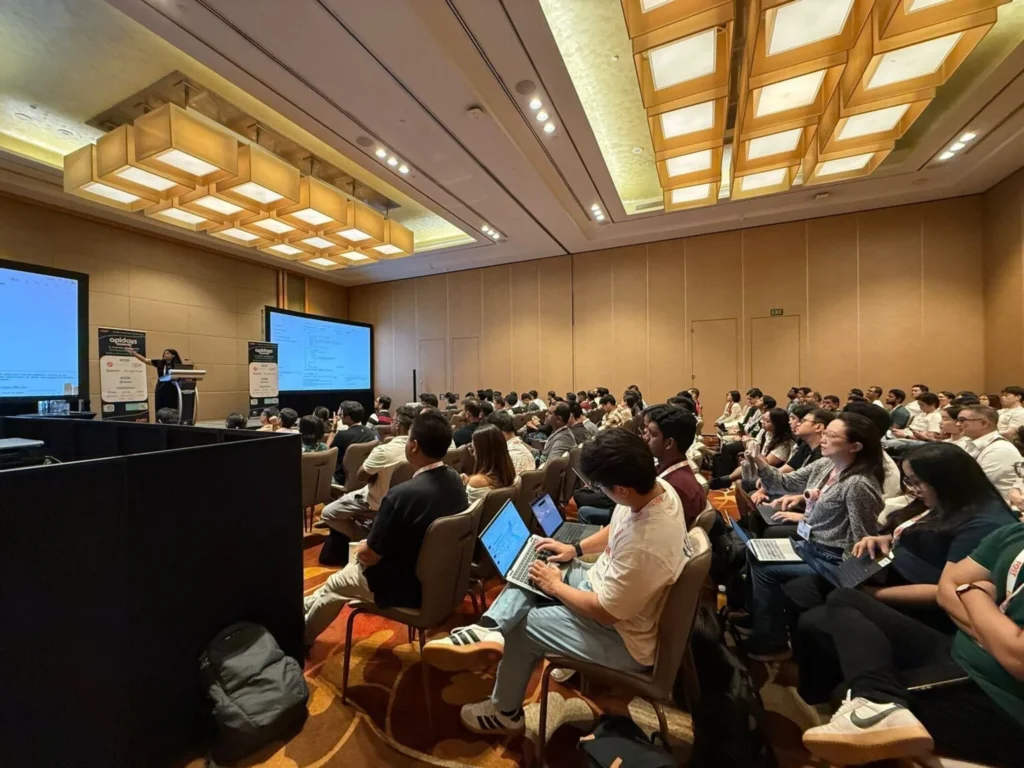
The shift from API calls to agent calls is no longer theoretical. At API Days Singapore 2026, held at Marina Bay Sands, Postman ran a hands-on workshop that made the transition feel immediate, and inevitable.
Over 150 developers joined the 50-minute live session. Together, they built Artemis Mission Control: a real working API with crew registration, mission logging, a live leaderboard, and a rocket trajectory that advanced with every request. Each attendee had their own call sign and API key. The session was not a slide deck. It was live, in-production, and deliberately high-stakes.
Three features stopped the room cold. First, Postman Agent Mode turned a plain English prompt into a working post-response script, documentation, and a complete integration test suite. Second, the Visualize tab rendered a raw JSON response into a mission dashboard, one prompt, no front-end setup required. Third, and most significantly, Postman’s MCP server connected Claude directly to the Postman collection. From that point, the AI agent called the API autonomously. No copy-pasting. No manual collection runs. Just agent calls.
That last point captures what Model Context Protocol changes for API development. Traditional APIs follow hard-coded logic: if condition A, call endpoint X. MCP flips that model. Instead, it exposes available tools and lets the AI decide what to use, when, and in what sequence. Postman describes it as the USB-C of AI integration, one universal connection that works across compatible models and services.
Adoption, however, still lags behind awareness. According to Postman’s own research, two-thirds of developers know about MCP, yet only 10% use it regularly, and 24% plan to explore it eventually. Meanwhile, AI agents are already calling APIs, with or without standardised safeguards. The workshop made the case that waiting is not a strategy.
Postman has responded with a rapidly expanding toolkit. The platform now supports MCP natively alongside HTTP, GraphQL, gRPC, WebSocket, and more. Developers can create MCP requests, test them visually, and generate MCP servers from Postman’s network of over 100,000 public APIs, including verified sources like Salesforce, UPS, and others. The Postman MCP server on GitHub is open and actively maintained.
The lesson from Singapore is clear. The API era is not ending, but it is evolving. APIs built only for human developers are no longer enough. Agent-ready APIs, machine-consumable, secure, and predictable, are the next standard. And the teams that start building for that now will not need to catch up later.