Vercel Sandbox Firewall Now Supports Postgres Connections
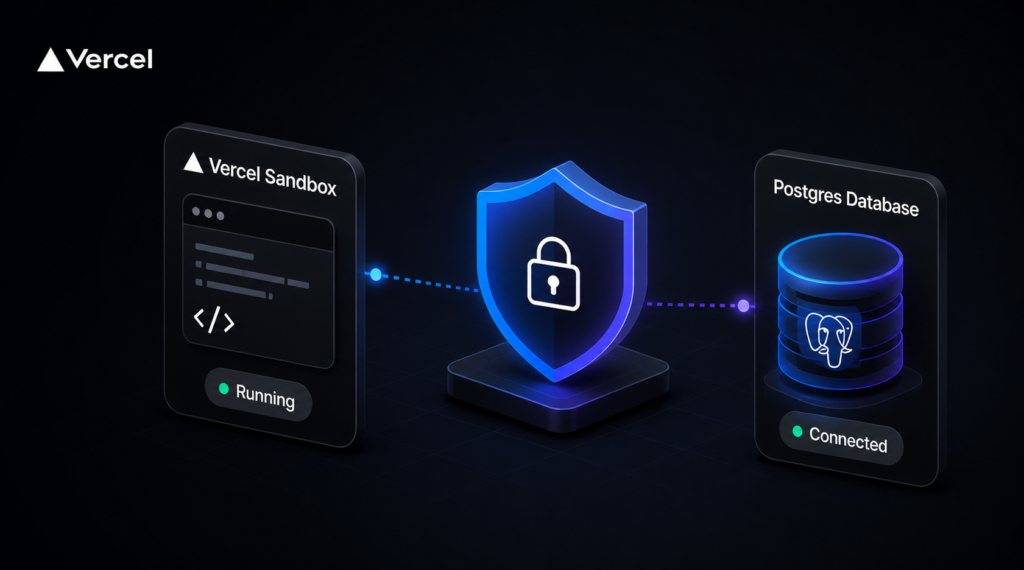
Vercel just shipped a meaningful update for developers. The Vercel Sandbox firewall now fully supports Postgres connections, removing a friction point that had blocked database access in restricted sandbox environments.
Until now, using SNI-based filtering in Vercel Sandbox meant the firewall checked domain names during a TLS handshake. That worked well for HTTPS traffic. Postgres, however, works differently. A Postgres client first opens a plain TCP connection, then upgrades to TLS. Because of that, the domain name was simply not visible when the firewall needed it. As a result, Postgres connections would fail entirely in domain-restricted Sandboxes.
Vercel has now resolved this. The Sandbox firewall detects the Postgres startup sequence, waits for the TLS upgrade, and then applies the domain policy before forwarding the connection. In other words, developers no longer have to choose between database access and a locked-down network.
Importantly, no code changes are required. Developers only need to add their database host to the Sandbox’s list of allowed domains. After that, the Vercel Sandbox firewall Postgres connection flows without further configuration.
The update supports several popular hosted Postgres providers. These include Neon, Supabase, AWS RDS, Nile, and Prisma Postgres. The typical workflow is straightforward, create a Sandbox with unrestricted network access, install a Postgres client, lock the network down to only the database host, then run the query.
There are a few technical requirements to note. TLS is mandatory for domain-based rules to work, so clients must connect using sslmode=require or higher. Fortunately, most managed Postgres providers enforce TLS by default. Additionally, GSSAPI encryption is not supported. Clients using gssencmode=prefer will automatically fall back to TLS, but those using gssencmode=require will not connect. Also worth noting: if a client uses sslmode=prefer and the database does not support TLS, the connection will fail rather than silently downgrade to plain text. That design choice keeps security behaviour predictable.
For teams running untrusted code in isolated environments, this update is significant. It means the Vercel Sandbox firewall and Postgres connections can now coexist securely, without loosening network restrictions or patching application logic.