US Ban on Chinese EV Tech May Leave American Automakers Stranded
Quick Reads
- The US banned all vehicles containing Chinese software from its roads starting March 2026.
- BYD outsells Tesla and Ford in most global markets, making it the world’s top EV brand.
- Chinese EVs cost as little as $7,800; the average American EV costs over $55,000.
- China and Japan are building a next-gen charger four times more powerful than the US standard.
- US automakers are also locked out of technology partnerships that could help close the gap.
The United States just banned technology that much of the world is rapidly adopting. On March 17, the US banned vehicles using Chinese software from American roads. Automakers must certify their connected systems contain no Chinese-developed code starting this July. Consequently, analysts and industry insiders are raising serious concerns about the decision.
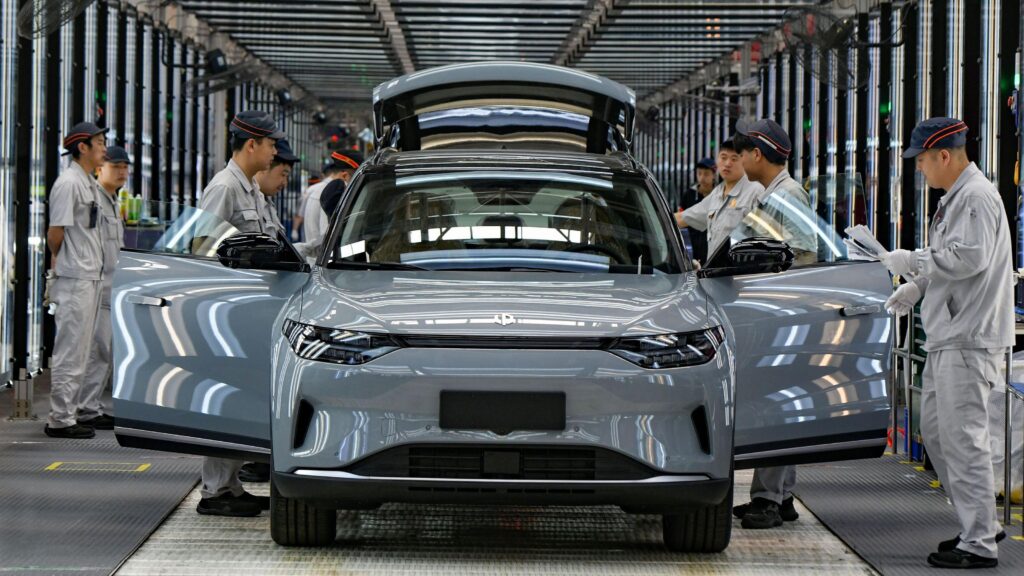
The US China EV tech ban arrives at a critical moment for global competition. BYD is now the world’s top-selling EV maker, surpassing Tesla and Ford Motor Company in several markets. Chinese EV companies built integrated ecosystems covering batteries, chips, and software under one roof. As a result, they manufacture vehicles faster and far cheaper than American competitors.
Notably, BYD produces roughly 75% of its components in-house, including batteries, chips, and software platforms. In contrast, a Ford EV uses software from Google and BlackBerry alongside imported batteries. Consequently, that fragmented system places American automakers at a major structural disadvantage. Furthermore, BYD develops new models within 18 months and sells some cars for about $7,800. Meanwhile, American EVs average over $55,000 and often require more than three years to develop.
The global standards gap is widening beyond software. China and Japan are jointly developing a next-generation charging plug called ChaoJi, capable of handling nearly four times the power of NACS, the North American standard designed by Tesla. If ChaoJi wins global adoption, US cars will charge on a slower, outdated system. Additionally, self-driving technology improves through real-world data collection, and China already operates roughly 2,300 autonomous taxis across 30 cities versus about 700 in the US.
Critics of the ban argue it doubles as a self-inflicted wound. Bill Russo, CEO of Automobility Limited and a former Chrysler executive, warned that US automakers “risk becoming regionally relevant rather than globally formative” if they remain shielded at home but fall behind on cost, speed, and intelligence abroad. Consequently, the US China EV tech ban may protect domestic dealerships in the short term while costing American brands their global competitiveness in the long run.