Tim Cook Is Leaving Apple. iPhone Builder Takes Over.
Quick Reads
- Apple announced on April 20, 2026, that Tim Cook will step down as CEO on September 1, transitioning to Executive Chairman of the board
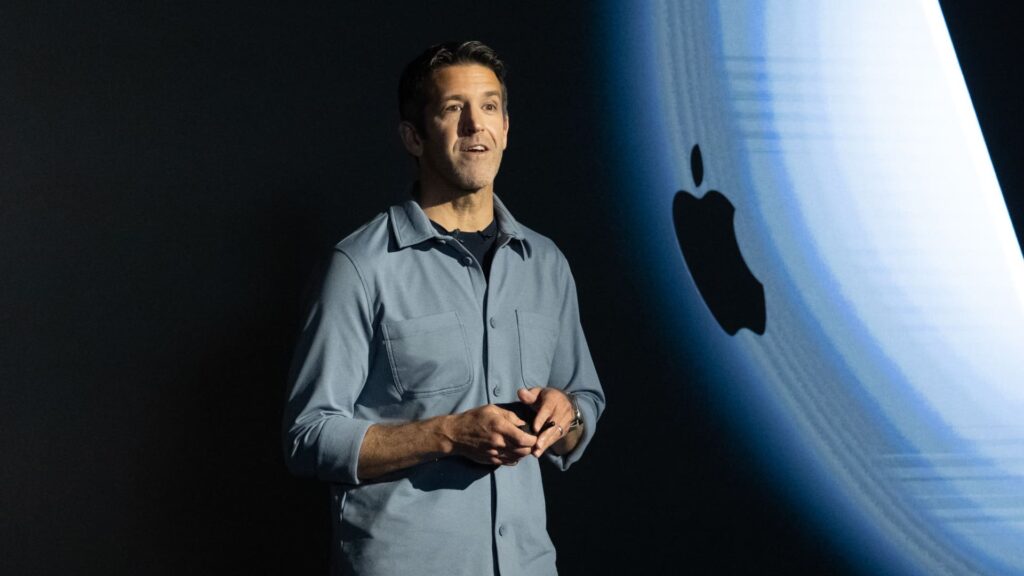
- John Ternus, 51, Apple’s head of hardware engineering for the past five years, will become the company’s eighth CEO, effective on the same date
- Ternus has spent 25 years at Apple, and his fingerprints are on every major hardware product from AirPods and the iPhone to the Mac’s shift to Apple silicon
- The handover is the first CEO change at Apple since Cook replaced Steve Jobs in 2011, and Ternus will inherit a company sitting at a $4 trillion market cap with serious AI challenges ahead
This is not a rumour. It is not a leak. Apple confirmed it on Monday in a formal press release: Tim Cook is stepping down as CEO, and John Ternus is stepping up. The transition is expected to happen on September 1, 2026, and was unanimously approved by Apple’s board of directors following what the company described as a long-term succession planning process. Cook does not disappear. He moves into the role of Executive Chairman, where he will handle policy engagement and work with Ternus through the handover period.
Fifteen years is a long time to run anything, let alone one of the most scrutinised companies on the planet. When Cook took over from Steve Jobs in 2011, Apple’s market cap sat in the hundreds of billions. It closed Monday at $4 trillion. Revenue nearly quadrupled. Apple Watch, AirPods, and the Vision Pro all launched on his watch. The supply chain he rebuilt after joining in 1998 became, for a stretch, the envy of the entire industry. Cook’s own words in the announcement were straightforward: “It has been the greatest privilege of my life to be the CEO of Apple.”
The person he is handing to is someone most people outside of Apple circles have never heard of, despite having touched almost every product they own. John Ternus joined Apple in 2001 as his second job out of college, after a brief stint designing virtual reality headsets at a company called Virtual Research Systems. He spent the first decade and a half working through Apple’s product design ranks, becoming Vice President of Hardware Engineering in 2013 and then Senior Vice President in 2021. In that SVP role, he led the engineering teams behind the iPhone, iPad, Mac, Apple Watch, AirPods, and the Vision Pro. He was also central to the Mac’s transition away from Intel processors to Apple silicon, one of the most significant architectural shifts in the company’s recent history.
It was described as someone who knows Apple at its core, and that is not flattery. His team built the MacBook Neo, Apple’s new affordable laptop. His team shipped the iPhone 17. As it was noted, Ternus does not have an X account, a detail that says something about how he has operated. He is an engineer who leads with process and product, not public persona.
Cook described him in the announcement as someone with “the mind of an engineer, the soul of an innovator, and the heart to lead with integrity and honour.” Industry analysts were quick to note what the choice signals. Forrester principal analyst Dipanjan Chatterjee wrote that appointing a hardware engineer tells you Apple intends to keep betting on physical products even as it tries to reframe those products as platforms for AI-driven experiences. That is not a small distinction in 2026.
Because the challenges waiting for Ternus on September 1 are not small. : a knotted supply chain, geopolitical pressure, the ongoing memory shortage affecting Mac production, Trump administration tariffs on overseas components, and most importantly, a perception among investors and technologists that Apple has been slow in the AI race. The Siri upgrade was delayed. AI leadership was reshuffled in late 2025. The company announced it would integrate Google Gemini into an updated version of Siri. For a company that built its identity on doing things its own way, that is a complicated position to be in.
Noted that at 51, Ternus is roughly the same age Cook was when he became CEO, positioning him for potentially a decade or more in the role. The board clearly wanted continuity in both length and stability, not a short-term placeholder. Johny Srouji, previously Apple’s Senior Vice President of Hardware Technologies, moves into an expanded Chief Hardware Officer role to backfill the hardware engineering seat Ternus is vacating. The org chart shifts are immediate; the CEO transition follows in the autumn.
Apple shares dipped less than one per cent in after-hours trading on Monday. The market has seen this coming for a while. Mark Gurman had long identified Ternus as the leading succession candidate, and recent moves by Apple’s PR team to increase his public visibility were widely read as preparation for this moment.
The era that began the morning Steve Jobs introduced the iPhone to the world, and that continued through Cook’s extraordinary operational reign, is entering a new chapter. The person turning the page built most of the hardware that defined it.