Apple Names a New CEO as Elon Musk Targets Cursor in $60 Billion Deal
Two of the biggest stories in tech this week collided in one unmistakable signal: the AI arms race and corporate succession are reshaping the industry at speed.
SpaceX has struck a deal with AI coding platform Cursor to develop a next-generation “coding and knowledge work AI,” and the agreement includes an option to acquire the startup for $60 billion later this year. The potential SpaceX Cursor acquisition has stunned the industry, given that Cursor was valued at just $2.5 billion in January of last year, climbed to $9 billion by May, and was assigned a $29.3 billion post-money valuation when it closed on $2.3 billion in Series D funding in November.
The deal’s structure is equally eyebrow-raising. SpaceX said that at some undisclosed point later this year, it will either pay Cursor $10 billion for its work or proceed with the full $60 billion acquisition, a figure that represents a staggering jump from the $50 billion valuation Cursor was reportedly targeting in an upcoming private fundraising round.
The groundwork for the SpaceX Cursor acquisition was quietly being laid for weeks. Reports last week indicated that xAI would begin renting computing power from its data centers to Cursor, with the coding startup using tens of thousands of xAI chips to train its latest AI model. On top of that, two of Cursor’s most senior engineering leaders left the company to join xAI, where both now report directly to Elon Musk.
SpaceX is framing the deal as a fusion of Cursor’s developer reach with its own raw compute. The company described the partnership as combining Cursor’s product and distribution to expert software engineers with SpaceX’s Colossus supercomputer, which it claims has the equivalent compute power of a million Nvidia H100 chips. However, critics note the deal also exposes a key weakness: neither Cursor nor xAI has proprietary models that can match the leading offerings from Anthropic and OpenAI, the same companies now competing directly with Cursor for the developer market.
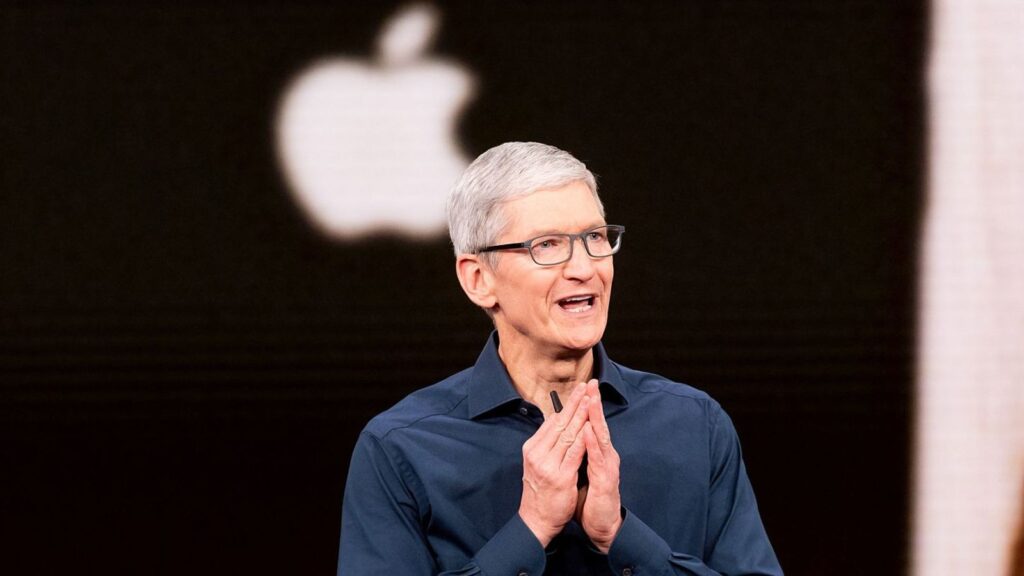
While Musk makes moves in AI, Apple is preparing for its own once-in-a-generation handover. After 15 years, Tim Cook will pass the Apple CEO role to John Ternus, the company’s senior vice president of hardware engineering, with Ternus set to take over on September 1. Now 51, Ternus has spent 25 years at Apple, joining the product design team in 2001, rising to VP of hardware engineering by 2013, and reaching the SVP level in 2021.
Ternus is widely seen as a hardware purist in the Steve Jobs mould. He oversaw launches including AirPods, Apple Watch, and the Vision Pro, and played a key role in Apple’s transition from Intel chips to its own Apple silicon. His most recent project before ascending to the top job was the MacBook Neo, Apple’s more affordable laptop aimed at competing with Chromebooks.
But inheriting Apple’s crown comes with real turbulence. The App Store’s 30% cut is under pressure, the behind-the-scenes power Apple once held over developers is being challenged, and AI-generated apps are changing what it means to build on Apple’s platform. Ternus will also have to chart a clearer course for Apple in the AI race, a space where the company has lagged behind rivals despite its hardware dominance.
Together, these two stories, the SpaceX Cursor acquisition bid and Apple’s CEO transition, reflect a tech landscape moving at a pace that leaves little room for hesitation. Whether Ternus can anchor Apple’s next chapter, and whether Musk’s $60 billion bet on Cursor pays off, are questions that will define the industry for years to come.