Skydweller Solar Drone Flight Record Broken
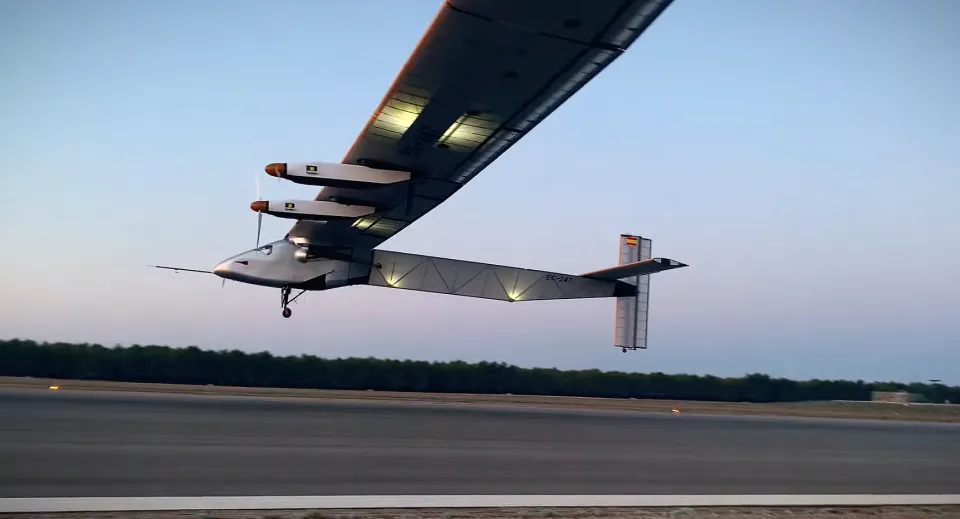
Skydweller Aero successfully conducted an 8-day autonomous maritime patrol flight with a large solar-powered drone that had a wingspan comparable to that of a Boeing 747. It took off from Stennis International Airport in Mississippi, USA, on April 26, 2026.
The mission was part of a real military exercise. Skydweller Aero conducted test flights as part of a naval fleet exercise, in collaboration with the US Navy’s Naval Air Warfare Centre Aircraft Division. The drone used multiple information-gathering sensors to formulate search-and-rescue routes and photographed the sea with infrared and electro-optical cameras.
In addition, the aircraft itself has a remarkable history. The Solar Impulse 2 originally completed a historic round-the-world trip in 2016 without using jet fuel. Three years after that globe-trotting flight, it was sold to Skydweller Aero, which converted it into a drone.
The drone carries 17,000 solar batteries on its wings. Its maximum payload capacity is 800 pounds, and it can normally stay airborne for 30 to 90 days.
Following the naval exercise, Skydweller’s drone remained airborne to wait for a major cold front covering the Gulf of Mexico to pass. It stayed near Key West until May 1st, after which it moved to southern Cuba and the northern Cayman Islands. Then, on May 3rd, as signs of improving weather appeared, it began its return to Stennis International Airport.
Why the Skydweller Solar Drone Flight Record Ended in the Sea?
However, the weather turned against it. On its return journey, the drone encountered more severe weather than forecasted, including intense turbulence and vertical gusts. Although the aircraft and autonomous systems functioned as designed, maintaining altitude in the adverse weather required more power than anticipated, necessitating a controlled water landing on the morning of May 4th.
As a result, the aircraft sank. The drone uses a composite material with no buoyancy. It sank after landing. Apart from the battery level, the aircraft structure, systems, and redundancy were all functioning normally.
The Skydweller solar drone flight record stood as a genuine milestone. By the time it went under, the drone had completed a record-breaking solar-powered flight of 8 days and 14 minutes, longer than any previous flight by either a drone or a crewed aircraft.
“Ultimately, a record-breaking flight of 8 days and 14 minutes validates the reality of perpetual, solar-powered flight in a military mission-relevant environment,” the company said.
However, the loss carries real consequences. Skydweller Aero told Ars that it has no other prototypes immediately ready to replace the lost drone. The Swiss Museum of Transport in Lucerne will also not get to display the historic aircraft per an original agreement.