Phoebe Dynevor Gives Birth Mid-Shark Attack in Netflix’s Wildest Film of 2026
Quick Reads
- Thrash, Netflix’s new shark disaster thriller, stars Phoebe Dynevor, Whitney Peak, and Djimon Hounsou and is now streaming globally.
- ·The film is directed by Norwegian filmmaker Tommy Wirkola, whose previous credits include Violent Night and Hansel & Gretel: Witch Hunters.
- ·Dynevor’s character is heavily pregnant throughout the film and gives birth in shark-infested floodwaters, a scene critics have called the film’s most talked-about moment.
- ·The film was originally planned for a theatrical release by Sony Pictures before being picked up by Netflix.
- ·Critical consensus describes Thrash as a lean, competent B-movie that delivers on genre thrills without breaking new ground.
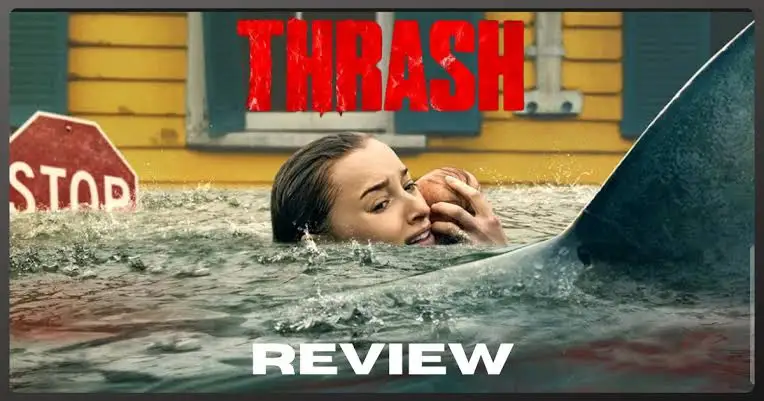
Netflix has a new contender for the summer’s most outrageous streaming moment. Thrash, the shark survival thriller from director Tommy Wirkola, landed on the platform on April 10 and is already generating the kind of word-of-mouth that money cannot buy the sort where someone grabs your arm and says, “You have to see this scene.” That scene involves Bridgerton alumna Phoebe Dynevor delivering a baby in the middle of a flooded street while bull sharks circle below. It is exactly as chaotic as it sounds.
Set in the fictional coastal town of Annieville, South Carolina, the film follows a group of residents who fail to evacuate before Hurricane Henry, a storm so severe that one character compares it to a Category 6 makes landfall and submerges the town. Among those trapped are Lisa (Dynevor), a heavily pregnant woman recently abandoned by her fiancé; Dakota (Whitney Peak), a young woman battling agoraphobia after losing her mother; and Dale (Djimon Hounsou), a marine biologist and Dakota’s uncle determined to reach her. The hurricane does not arrive alone. It brings a school of bull sharks with it, and before long an entire neighbourhood block has become a waterlogged arena of survival.
Wirkola, who made his name with the Nazi zombie film Dead Snow before graduating to Hollywood with Violent Night, is working firmly in B-movie territory here and largely knows it. According to Variety, the film clocks in at just 86 minutes and uses that tight run time deliberately, turning a submerged neighbourhood into a kind of shifting, collapsing water-world stage set that escalates with lean efficiency. The production had the backing of producer Adam McKay and was originally earmarked for a Sony theatrical release before landing at Netflix, a path that critics note is still visible in the film’s polished visual presentation. The environmental subtext is present too: the hurricane intensifies after hitting record-temperature warm waters off the coast, a detail Wirkola grounds the disaster in without letting it swamp the genre mechanics.
Whether the film fully delivers depends on which version of it you were expecting. The Hollywood Reporter called it “preposterous but enjoyable,” pointing to the film’s self-awareness and Wirkola’s fluid control of space as what separates it from the drearier end of the shark thriller canon. Screen Rant described it as “pacy, pulpy and eventful enough to amuse fans of the shark subgenre,” while flagging that the film never quite commits to a single tone pivoting from semi-serious disaster drama to knowing absurdity in its final stretch in a way that some viewers will find exhilarating and others jarring. The kills are gory, the stakes are kept personal, and the film’s most unhinged sequence in which foster children strap explosives to raw meat and lob them at incoming sharks arrives in the final act like a different film entirely walked in through the door.