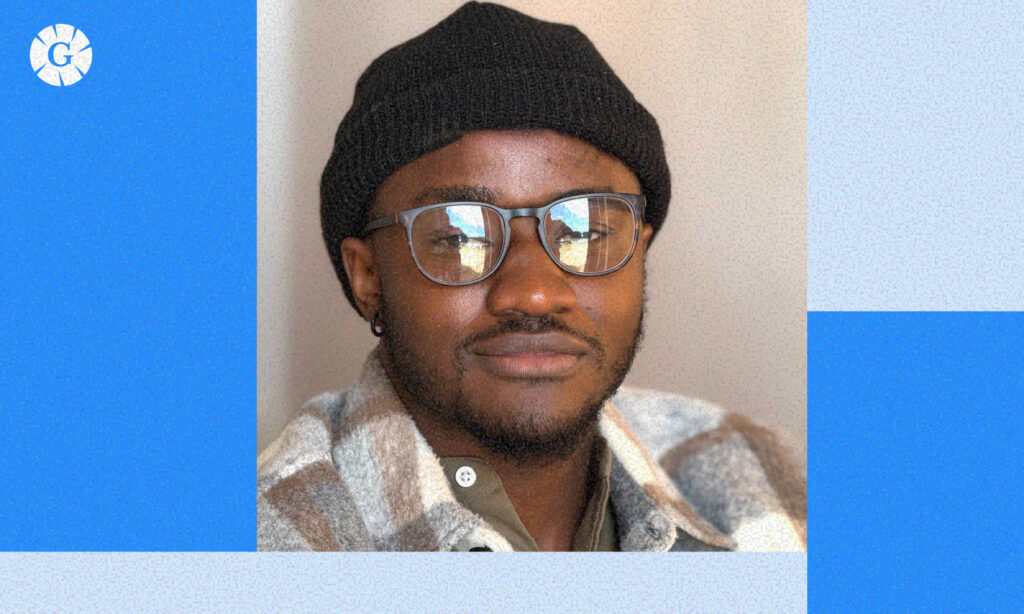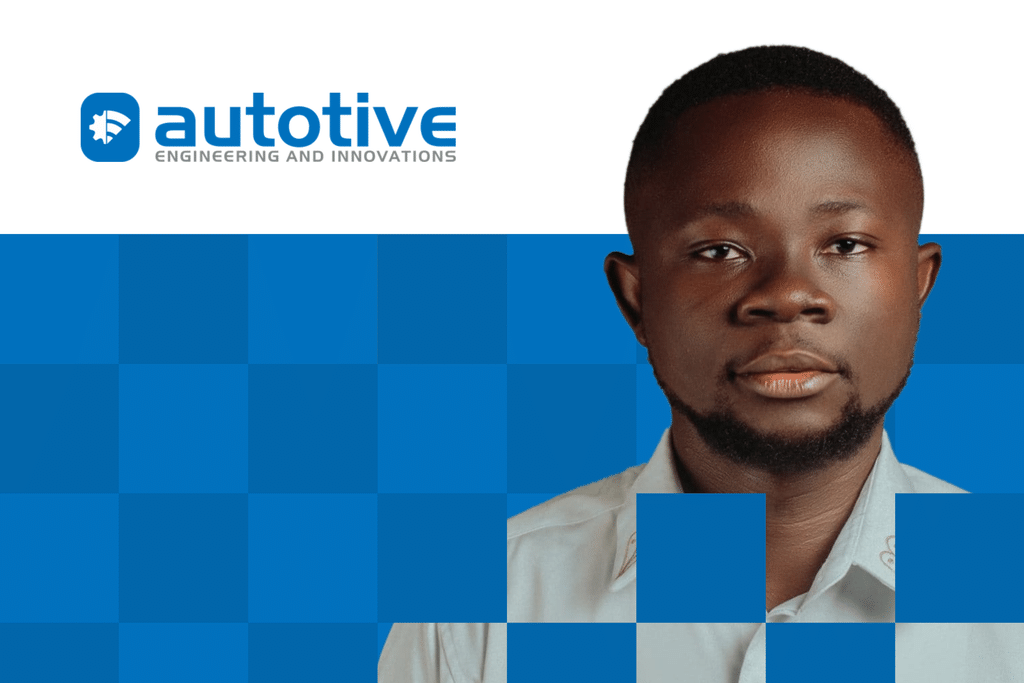
Meet George Otive Georgia, an electrical and electronics engineer, entrepreneur, and founder of AUTOTIVE Engineering & Innovations (AEI), a Nigerian hardware engineering and applied research company based in Ozoro, Delta State.
For AUTOTIVE Engineering & Innovations, the journey began in a sitting room in Ozoro, where ideas were built, tested, challenged and improved.
One of its innovations, the Smart Energy Management System (SEMS), is an intelligent electrical distribution board designed to improve electrical safety through circuit monitoring, overload protection, voltage monitoring, and early detection of potential fire hazards.
But beyond the innovation lies a story of persistence, experimentation and the determination to keep building despite the challenges of hardware development.
Here are our Conversations with the founder of AUTOTIVE Engineering & Innovations about the inspiration behind SEMS, the realities of building from scratch, lessons from early failures and the company’s vision for the future.
Tell us about yourself?
My name is George Otive Georgia. I am an electrical and electronics engineer, entrepreneur, and the founder of AUTOTIVE Engineering & Innovations (AEI), a hardware engineering and applied research organization based in Ozoro, Delta State, Nigeria.
My path into engineering did not begin with success. It began with a failure. I first studied Physics at Delta State University, Abraka, but my grades were poor, and in 2016 I left at 300 level. For many people, that is where the story ends. For me, it was where it started. I decided to begin again, on my own terms. I started teaching myself electronics, spending my small upkeep money on components and learning from YouTube videos and circuit diagrams late into the night.
That decision changed my life. I went on to earn an HND in Electronics and Telecommunications Engineering, and later a Bachelor of Engineering degree in Electrical and Electronics Engineering, graduating in the Second Class Upper Division with a CGPA of 3.53. Along the way, I was named Most Creative Student in my department at Delta State Polytechnic, Ozoro.
Today, I design and build smart energy and electronic systems, carry out engineering research, and train young Nigerians to do the same. But I have never forgotten where I started, or what it took to get here.
Tell us about your business and the products or services you offer.
I founded AUTOTIVE Engineering & Innovations in 2019 with one goal in mind: to build an organization that solves real problems with real hardware, right here in Nigeria.
Our work stands on three pillars. We build products, we carry out applied research, and we develop engineering talent.
Our lead product is the Smart Energy Management System (SEMS), an intelligent electrical distribution board designed to make buildings safer and smarter. It watches each circuit, protects against overload, monitors voltage, and detects heat, smoke and flame before small faults become disasters. It also helps people see and manage how they use electricity.
We also build lithium iron phosphate (LiFePO4) energy storage systems that give homes and businesses reliable backup power. To date, we have deployed several of these units in the field.
Beyond our own products, we take on engineering research and development work across embedded systems, the Internet of Things, automation and electronic product design. And through hands-on training and mentorship, we help students and young engineers gain the practical skills that classrooms often leave out.
What problem are you solving with your work, and why does it matter?
I am solving problems that touch people where they live and work, in a country where reliable electricity, electrical safety and access to the right technology are still daily struggles.
Across Nigeria, homes and businesses lean on backup power because the public supply cannot be trusted. But having power is not the same as having safe, well-managed power. A faulty circuit, an overloaded line, or an unseen fault can cost a family its home, or worse. That is the gap SEMS is built to close. It gives building owners real visibility into their energy use, their circuit conditions and the hidden dangers behind the wall.
Our energy storage systems answer the other half of the problem, keeping the lights on when the grid goes dark.
There is a human problem too. Nigeria produces many bright young engineers who leave school having rarely touched real equipment or built a real product. I know that gap well, because I once stood in it. Through our training, we are helping a new generation cross it. For me, engineering should not live only in textbooks. It should become something that improves an ordinary person’s life.
How did you get into this space, and what has your journey been like so far?
My journey began with stubborn curiosity. After I left Physics in 2016, I taught myself electronics one component at a time. In 2017 I entered Delta State Polytechnic, Ozoro, and kept building. By 2019 that curiosity had a name: AUTOTIVE Engineering & Innovations.
In the early days, my entire laboratory was my sitting room. I built, I tested, I failed, and I built again. Starting a hardware company in this environment is hard. Funding, equipment and the right technical resources are never easy to find. But I kept going, and slowly the work began to speak for itself.
In 2025, our Smart ID Management System stood out among 3,000 innovations at the NextGen Innovation Challenge, placed in the top three in Delta State, and earned me the honor of representing the state at the Grand Finale in London, where it received a Grand Finale recognition award. The following year, in 2026, our Smart Energy Management System repeated the feat, ranking among the top six in Delta State and carrying me back to the London Grand Finale once again.
The recognition kept coming. In 2026, SEMS was selected among the top ten out of 661 applications nationwide in SMEDAN’s Zero to 100 challenge, and I pitched it live at the National MSME Conference in Lagos. Our work has also won ₦6 million in non-dilutive grants, through the Kestin Pondi Business Grant and the Vision to Venture program supported by the Chris Emodi Foundation, which I invested into the precision tools that make our designs more accurate. Years earlier, one of my builds was even featured on television.
Our research has reached the page as well. I co-authored a peer-reviewed paper on a GSM-enabled smart prepaid energy meter, published in Acta Scientific Artificial Intelligence.
What are you currently focused on building or improving next?
My immediate focus is taking SEMS from a working prototype to a certified, production-ready product.
But the achievement I am proudest of cannot be hung on a wall. Since 2019, we have trained more than 100 people. We have mentored over 70 SIWES students, guided more than 30 undergraduate engineering projects, and delivered training for 150 participants through the SALIMO-WITS Foundation. Two of our former trainees now work with us full time. That, to me, is the real return on everything we have built.
Looking back, the journey has been one of learning, setbacks and quiet progress. We are still building. But every step has deepened my belief that meaningful innovation can come from anywhere, even from a sitting room in Ozoro.
What has been the most challenging part of your work, and how are you handling it?
The hardest part has been building real hardware in a place that is not yet built for it.
Software can be rewritten in an afternoon. Hardware cannot. It demands prototype after prototype, physical testing, parts that fail and must be replaced, and real money spent long before a product earns a single naira. There are nights when I know exactly what to build, and the only thing standing in the way is the resource to build it.
I handle this the way I have handled everything since 2016: with patience and resourcefulness. We earn revenue from our energy storage deployments and our training, and we pour it back into better tools and better prototypes. We move in stages instead of trying to do everything at once. And we use competitions and challenges both to test the work in public and to fund the next step.
I have learned that building an engineering company takes more than technical skill. It takes discipline, endurance, and the will to keep moving when progress is slow. Those are lessons my earliest failure taught me well.
What are you seeing in your space right now that people are not paying attention to?
Everyone is talking about generating power. Almost no one is talking about what happens to that power once it enters the building.
The national conversation is about generation, solar and backup systems, and rightly so. But the distribution board and the wiring behind the wall are quietly ignored, and that is often exactly where fires begin. Circuit-level monitoring, protection against abnormal conditions, and intelligent energy management deserve far more attention than they get.
The second thing people miss is local hardware. We celebrate software and apps, but the physical systems that power our homes, industries and farms need innovation too. Nigeria has the talent and the technical capacity to build these systems ourselves, instead of importing nearly everything. What we are missing is a stronger bridge between research, product development, industry and the market. Building that bridge is part of the work I have set out to do.
We already have a prototype that brings together the hardware, the firmware, the cloud platform and the mobile application. Right now, we are sharpening its performance through field testing, correcting measurement inconsistencies, and refining the experience for the people who will use it. The next milestones are production-ready hardware and wider field validation before we scale deployment.
Alongside SEMS, I am strengthening our energy storage line and deepening our research and product development capacity. I am also focused on growing a stronger team, so that more young engineers can cut their teeth on real projects, the way I wish I could have.
My long-term ambition is to grow AUTOTIVE Engineering & Innovations into a recognized African engineering organization that can design, manufacture and commercialize practical hardware for both local and international markets.
Where can people find you?
People can follow our work and reach us through the channels below.
AUTOTIVE Engineering & Innovations
Website: https://autotive.com.ng
Founder profile: https://autotive.com.ng/george
Email: [email protected]
We are based in Ozoro, Delta State, Nigeria.
AEI | Autotive Engineering & Innovations — IoT & Hardware Engineering