Beyond Code: How Faith Is Combining Fintech, AI, and Community Impact
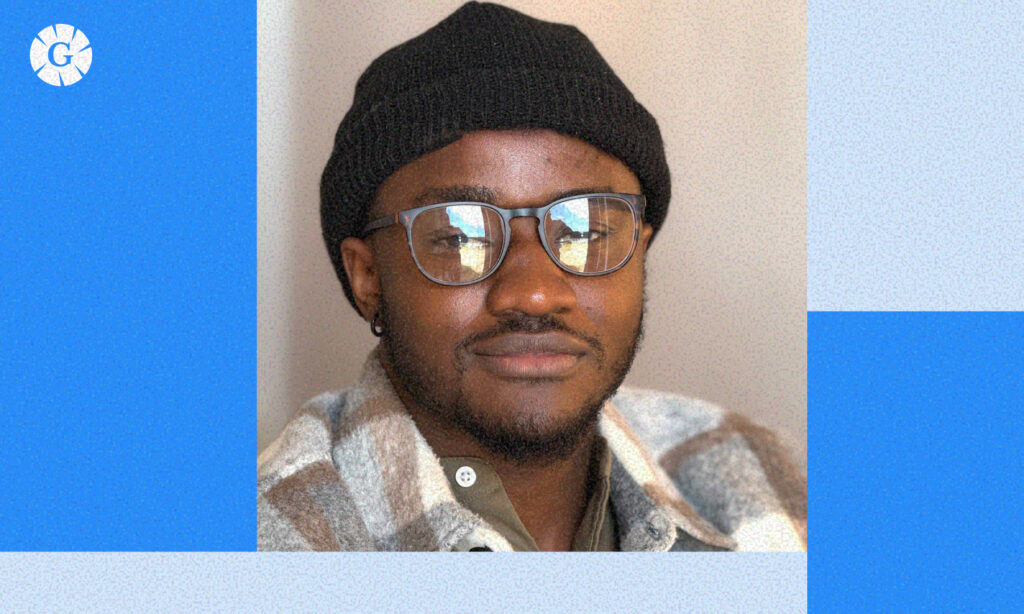
Some people build. Some people teach. Very few do both at the same level, and fewer still show up on national television to explain why it all matters to the person watching at home.
Faith Sodipe is that rare kind of technologist.
When Glostarep spoke with the software engineer, researcher, and ecosystem builder, what came through was not just an impressive CV, it was a coherent philosophy. That technology’s greatest impact happens when rigorous engineering meets genuine human connection. That a system nobody understands is a system nobody trusts. And that trust, in the digital economy, is everything.
Faith has architected cross-border payment infrastructure for African SMEs, led mobile development for one of the continent’s largest investment management firms, contributed code and documentation to Microsoft’s .NET SDK, and spoken on cybersecurity to national audiences on Channels TV and TVC News. Later this year, he takes that same thinking to the MultimodalAI’26 workshop in London, presenting research on Multimodal AI alongside speakers from Google, Cloudflare, and Shopify at Developer Up North, the largest frontend conference in Hull.
But what makes Faith’s story worth reading is not the list of achievements. It is the thread running through all of them a quiet, deliberate commitment to making sure the next person does not have to figure it out alone.
This is his story, in his own words.
Tell us about yourself
I am a software engineer, technical researcher, speaker, and ecosystem builder. My work spans three interconnected roles: building secure, scalable systems; mentoring the next generation of technologists; and contributing to public knowledge through speaking, research, and open source.
Professionally, I have built and scaled systems across industries. Most notably, as Backend Engineer, I architected a cross-border payment infrastructure targeting SMEs across Africa, enabling seamless remittance. In the same light, I have helped build startup ideas from 0 to 1, led mobile development innovations for one of the biggest independent, multi-asset investment management firms for years where we revolutionized how investors buy, sell and manage their investment portfolio.
I am also currently working on something interesting with a friend; a system that will optimise learning for pupils with learning disabilities in the United Kingdom.
Alongside my technical work, I am deeply committed to growing the tech ecosystem. I volunteer as a coach and chapter organizer at Codebar, a global organization that provides in-person and virtual one-on-one coaching to underrepresented people in tech. I am also an active mentor with the Women Coding Community (WCC) , helping aspiring female developers navigate their careers.
My work has been recognized nationally: I have been invited as a cybersecurity expert on Channels TV to discuss staying safe against cybercrime in the digital era of AI and as a tech career advocate on TVC News to guide young Nigerians into the digital economy. I was also a recipient of the Crest Africa Award in 2025 where I was part of few selected as the tech impact leader for that year.
When I am not building or mentoring, I am sharing knowledge. I have spoken at minor and major conferences, both nationally and internationally. My research has led to published pre-print papers, and I continue to write and present on topics at the intersection of fintech, AI, Machine Learning and secure systems. I also contribute to open source, not only to support community projects but to sharpen my own communication and technical skills.
What problem are you solving with your work, and why does it matter?
I solve two interconnected problems: financial infrastructure gaps and the cybersecurity confidence gap.
Financially, It is quite evident that African SMEs struggle to accept and send cross-border payments. The fees are high, the settlement times are slow, and the technical complexity is overwhelming. I built a payment channel to create faster, cheaper, more transparent rails for business-to-business payments. This matters because when SMEs can trade globally without friction, local economies grow and jobs are created.
In cybersecurity, I realized that most online safety conversations focus on individuals, not the businesses that serve them. When I spoke on Channels TV about staying safe online, I emphasized that a single breach at a small business can destroy livelihoods. My work in this space, both through public education and secure system design, helps businesses protect their customers’ data and their own reputations.
Both problems matter because trust is the currency of the digital economy. If payments are unreliable or if data is unsafe, people retreat from digital tools. My work rebuilds that trust, one system and one conversation at a time.
How did you get into this space, and what has your journey been like so far?
I have always known about computers since I was 10 or so but my journey began in university, where I co-developed a biometrics system for examination check-ins and check-outs. That project taught me that technology could solve real, painful problems, not just theoretical ones.
After graduating, I spent years as a software engineer, eventually being able to lead major projects; the first of many more that I have now spareheaded. The first major turning point was building a payment platform from the ground up. I architected the payment processing engine, integrated with banking partners, and learned firsthand how hard cross-border finance really is. The release of that product slowed down for strategic reasons, but the technical innovation I led remains a career-defining achievement.
The second turning point was realizing I could not just build things, but also teach and advocate, and trust me I used to always be vocal and reserved at the same time( I don’t know how to explain it better). My TVC News interview on “Getting into Tech for Young Nigerians” was watched live and in the youtube archives by thousands. The response was overwhelming, people reached out asking for advice, suggestions and mentorship. That led me to founding a short term mentorship group, and that has guided aspiring engineers, 2 of which now work as software developers. My Channels TV interview on cybersecurity reached an even broader audience, solidifying my role as a public educator.
Most recently, I have focused on open source. I have contributed documentation and code to Microsoft’s .NET SDK and added features to a library I was using, and was missing something I needed. I also already have a busy speaking schedule for 2026, from speaking at developer meetups across Manchester and Liverpool, to upcoming major conferences, like the MultimodalAI’26 workshop in London, organized by a £1.8 million EPSRC-funded network where I will be presenting my research on MultiModal AI in Deep Learning Decisions and then Developer Up North (the largest frontend conference in Hull) where I will be speaking alongside professionals from companies like Google, CSS Wizardry, Cloudflare and Shopify. I also envisage that there will be more across the United Kingdom and Europe as the year goes by.
My journey is not a straight line. I have built products that never made production despite grinding endlessly to build them, faced rejection from conferences, criticised PRs on open source, and had to learn how to translate deep technical work into public education. But every step has reinforced my belief that technology’s greatest impact happens when you pair rigorous engineering with genuine human connection.
What’s been the most challenging part of your work, and how are you handling it?
The most challenging part has been the tension between building and explaining.
As an engineer, I love diving deep into architecture, performance optimization, and security protocols. But I have learned that a brilliant system that no one understands or trusts is useless. When I led innovation in teams, we spent months perfecting the payment routing algorithm, exploring the best optimized experience for users who want to use our app, Accessibility, security et.c. But the real breakthrough came when I learned to explain to potential users why it was safer, faster, and cheaper than alternatives.
How I handle it: I force myself to document everything I build, not just for myself but for others. My open source contributions include documentation because I know that a feature is only as valuable as its clarity to the next developer. My speaking engagements are practice in making complex topics accessible. And my articles on TechPression about balancing innovation with security are my attempt to bridge that gap for other engineers.
The other challenge is sustainability. My day job is demanding. My open source, speaking, and mentorship happen at night and on weekends. I handle this by being ruthlessly intentional about what I take on. I have said no to many opportunities because they did not align with my core mission at the moment as I have learned that depth beats breadth.
What are you seeing in your space right now that people are not paying attention to?
The coming collision between AI-generated content and financial fraud detection.
Everyone is talking about generative AI and how creative it can be. Very few people are talking about how well it can impersonate legitimate transactions. In the payments space, fraud detection systems rely on historical patterns. AI can now generate entirely new, never-before-seen transaction patterns that look almost legitimate. The fraudsters are already using this. The detection systems are not ready.
Another blind spot: The assumption that open source contributions must be code. Documentation contributions are seen as “lesser.” This is a mistake. I have fixed missing documentation in the .NET docs because thousands of developers were stuck. That contribution had an immediate, measurable impact on real people’s productivity. We need to value technical communication equally with technical implementation.
What are you currently focused on building or improving next?
Three things:
Firstly, I am expanding my public education work. My TV appearances reached thousands, but I want to go deeper. I am developing a workshop curriculum for career switchers, and I am actively seeking more speaking engagements at UK/EU based conferences. My acceptance to speak at the MultimodalAI’26 workshop in London is a major step. I plan to use this as a launchpad for regular contributions to the UK tech ecosystem, including structured mentorship and coaching through programs like the WCC and Codebar.
Secondly, and most importantly, I am preparing to build global skills. I have a deep respect for the global tech sector, particularly its strengths in fintech, AI research, and open source governance. I have already begun engaging with that ecosystem by speaking at tech meetups, and then conferences such as Developer Up North, .NET Liverpool, PyData Manchester etc. My next chapter is about translating my expertise into contributions that help global businesses grow securely and inclusively.
Lastly, I am deepening my open source contributions. I am not satisfied with one-off commits. I am building a sustained track record across the ecosystem, with the goal of becoming a recognized maintainer someday. This is part of my broader strategy to demonstrate sustained technical leadership, which is critical for recognition at the national and international level.