Bitcoin Holds Near $77,000 Ahead of Fed Rate Decision as Trump Eyes Extended Hormuz Blockade
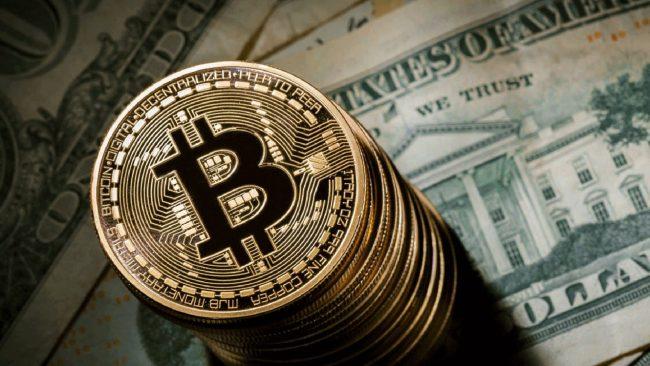
Bitcoin is holding its ground near $77,000 even as the world around it seems to be on fire, and that calmness is telling a story of its own.
The largest cryptocurrency was trading just under $77,000 during Wednesday’s Asian session, up a slim 0.1% over 24 hours and down 0.8% on the week, maintaining a tight range even as Brent crude surged past $111 a barrel. The oil spike came after a Wall Street Journal report that President Donald Trump had directed aides to prepare for a lengthy U.S. naval blockade of the Strait of Hormuz, a chokepoint through which a significant share of the world’s energy supply passes.
The geopolitical pressure is real. Iran has been described as being in a “State of Collapse,” according to Trump’s own words on Truth Social, while Tehran has reportedly signalled it may consider an interim deal to reopen the strait if Washington eases its blockade of Iranian ports. Yet Bitcoin has barely flinched.
All eyes now shift to Washington for the Federal Reserve’s rate decision, expected Thursday. Fed Chair Jerome Powell is widely expected to hold interest rates steady in what economist Ed Yardeni has called his “swan song”, the final press conference of his tenure, with Powell’s term ending May 15. The Senate Banking Committee is set to confirm Kevin Warsh as his successor, with a final vote potentially coming soon after. For Bitcoin investors, the Fed’s stance matters: lower rates typically benefit risk assets like crypto by reducing the appeal of bonds.
While Bitcoin steadies near $77,000 ahead of the Fed rate decision, most of the broader crypto market is taking a hit. Ether fell 2.6% on the week to $2,310, XRP dropped 3.8% to $1.39, Solana lost 3.2% to $84.57, and BNB shed 2.3% to $625. The lone standout was dogecoin, up 5.5% on the week to $0.1016, the only top-10 non-stablecoin token to print gains over seven days. That divergence has quietly nudged Bitcoin’s market dominance higher, the kind of rotation that typically happens when macro stress sends investors toward the most established asset in the space.
Analysts say Bitcoin’s unusual steadiness isn’t accidental. Zaheer Ebtikar, founder of Split Research, explained that the supply overhang has finally dried up, and the sellers spooked by macro shifts or quantum fears have already exited, leaving the market far thinner on the sell-side than it was months ago. He added that Bitcoin has found a stable floor and moved away from headline-driven drama toward a more mature phase of growth.
U.S. spot Bitcoin ETFs drew in over $2 billion in net inflows in April, marking a second consecutive month of positive flows, according to DefiLlama data, a sign that institutional interest isn’t going anywhere despite the macro turbulence.
The Federal Reserve’s upcoming policy decision and Trump’s posture on the Strait of Hormuz remain the two immediate variables that could sharply move Bitcoin’s price in either direction. Analysts note that $75,000 remains the critical downside support to watch, while a clean push back above $80,000 would be needed to confirm the rally structure is still intact.
For now, as the Bitcoin Fed rate decision moment draws near and the Hormuz standoff continues to roil oil markets, the world’s largest cryptocurrency is doing something remarkable, staying very, very still.