Benchmarking Claude, GPT-4o, and Gemini on Real Dev Tasks
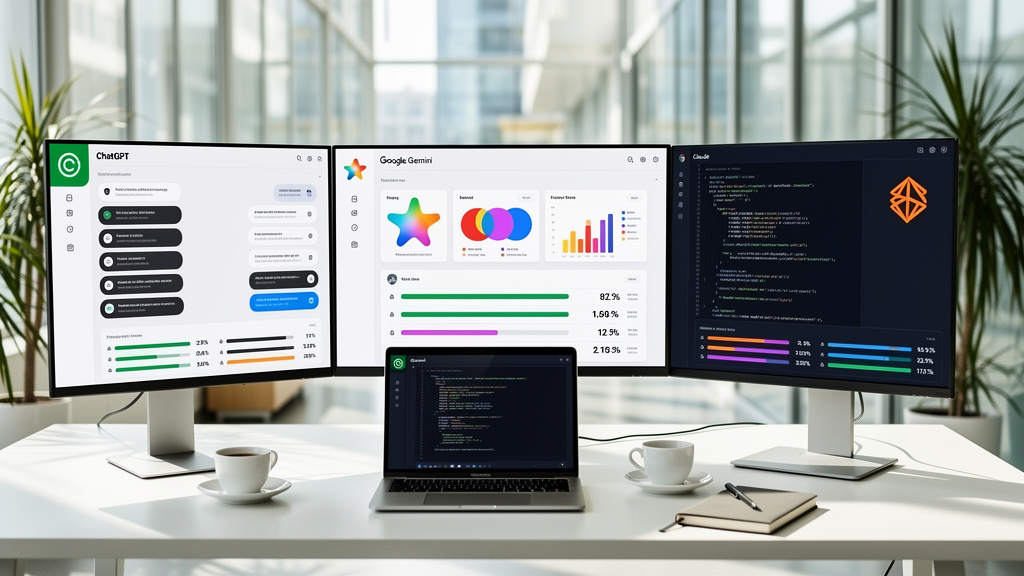
Choosing an AI model by instinct is costing developers real money. Nate Voss, an indie developer building AI workflow tools, put Claude 3.5 Sonnet, GPT-4o, and Gemini 2.0 Flash through five real developer tasks. He used PromptFuel, a CLI tool, to track token usage and calculate costs. His findings challenge how engineers typically pick their AI model.
The five tasks covered JSON schema validation, multi-file code review, refactoring suggestions, bug diagnosis, and documentation generation. Each model received identical inputs across every test.
Gemini 2.0 Flash was the cheapest, by a wide margin. It cost roughly 90% less than GPT-4o per task. But that price gap only told part of the story. On high-stakes tasks like code review and bug diagnosis, Gemini gave surface-level feedback and missed root causes. Claude, on the other hand, caught subtle issues and produced production-ready refactors. It also used fewer tokens to do it. GPT-4o landed in between, thorough, but often verbose, and not proportionally better for its higher cost.
Three lessons stood out from benchmarking Claude, GPT-4o, and Gemini on real dev tasks. First, the cheapest model is not always the best value. Gemini’s low price suits throwaway jobs like formatting or generating examples. But for work that matters, debugging or reviewing code, Claude’s accuracy reduced the need to iterate. Second, token count does not predict output quality. All three models produced similar token volumes for the same input, yet the quality gap was significant. Claude consistently delivered more useful output per token. Third, real-world testing beats generic benchmarks every time. Model rankings shifted depending on the task. No single model dominated across the board.
Voss also showed how prompt optimization adds up. By cutting redundant instructions and trimming examples, he reduced one code review prompt from roughly 750 input tokens to about 420. On Claude, that saved around $0.0012 per call. Run it 100 times daily, and that is $36 per year, for just one tool. Scale that across 50 internal tools, and the savings become hard to ignore.
His advice is straightforward. Use the PromptFuel CLI to run benchmarking on your own prompts. Install it with npm install -g promptfuel, then run the compare flag to get a cost matrix in under 30 seconds. Do not rely on someone else’s data, test your actual tasks.
Developers who pick AI models based on hype or leaderboard rankings are optimizing for the wrong thing. Benchmarking Claude, GPT-4o, and Gemini on real dev tasks, your tasks, is the only way to know which model truly fits your workflow. Pair that with prompt optimization, and that is where real performance gains and cost savings begin.