SpaceX Starfall Opens For Business With 1,000 kg Microgravity Flights
Quick Reads:
- SpaceX opened a commercial website for Starfall, a service offering routine microgravity access in low-Earth orbit for research, manufacturing and testing.
- Each mission carries up to 1,000 kg and 1 kW of payload power, with Ethernet data and continuous Starlink connectivity.
- SpaceX targets biomedical research, drug discovery and materials science, but hasn’t published pricing or a first commercial flight date.
SpaceX has opened a commercial website for Starfall, a service it says will give companies and researchers affordable, routine access to microgravity in low-Earth orbit for manufacturing, scientific research and testing. The page lives at spacex.com/starfall.
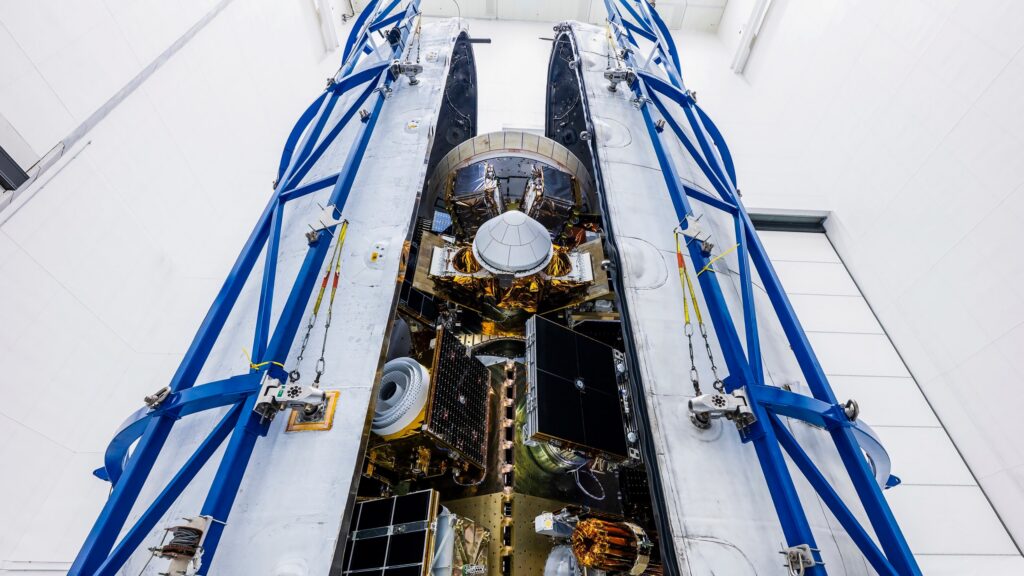
Starfall is an uncrewed, disk-shaped capsule, roughly 3.1 meters wide, 0.75 meters tall and about 2,100 kg empty, that carries experiments and manufactured goods to orbit and returns them to Earth. SpaceX lists these specs: payload capacity of 1,000 kg (2,205 lbs), 1 kW of payload power, an Ethernet data interface, mission length customized to each payload, and continuous Starlink connectivity. That link means customers can pull data while an experiment is still running, instead of waiting for splashdown.
SpaceX says the missions will fly on Starship, giving customers weeks of continuous microgravity. By comparison, it notes, drop towers and parabolic flights offer only seconds.
What Starfall Is Meant For
SpaceX pitches Starfall at three uses:
Biomedical research: advanced biomaterials, medical implants, stem-cell organoids and replacement tissues.
Pharmaceutical discovery: growing more uniform protein and drug crystals to speed up drug development.
Materials science: making next-generation materials and semiconductors using the vacuum and microgravity of space.
The vehicle isn’t new. SpaceX flew a Starfall demonstration on Falcon 9 on June 23, with a planned splashdown in the Pacific, and a second capsule has since flown on the Bandwagon-5 rideshare mission. SpaceX’s third-quarter results on October 20 said it had signed three commercial Starfall missions.
Much remains unstated. SpaceX hasn’t published pricing, a first commercial flight date or customer names, and it has said little publicly about how the earlier test flights performed. Whether the economics work for drug and chip makers will depend on those numbers, and on how often Starship actually flies.