Nexterity Robot Tackles a Risky Pipe Bolting Challenge
Quick Reads
- Nexterity has built a remote-controlled robot that automates dangerous pipe-bolting work.
- The robot tightens or loosens four bolts at once, cutting a grueling task down sharply.
- It fits inside a Pelican case, so one worker can carry it to any site.
- Founder Lindsey Elliott, a former ExxonMobil engineer, designed it around common two-to-eight-inch pipes.
- Nexterity joins 200 startups in Startup Battlefield at TechCrunch Disrupt this October.
Nexterity’s pipefitting robot promises to take the toughest part of pipe bolting off human hands. For years, founder Lindsey Elliott watched pipefitters battle fatigue, injuries, and a shrinking talent pool. As a former ExxonMobil engineer, she saw firsthand how loosening and tightening flange bolts wears workers down. As a result, she built Nexterity to tackle that exact problem.
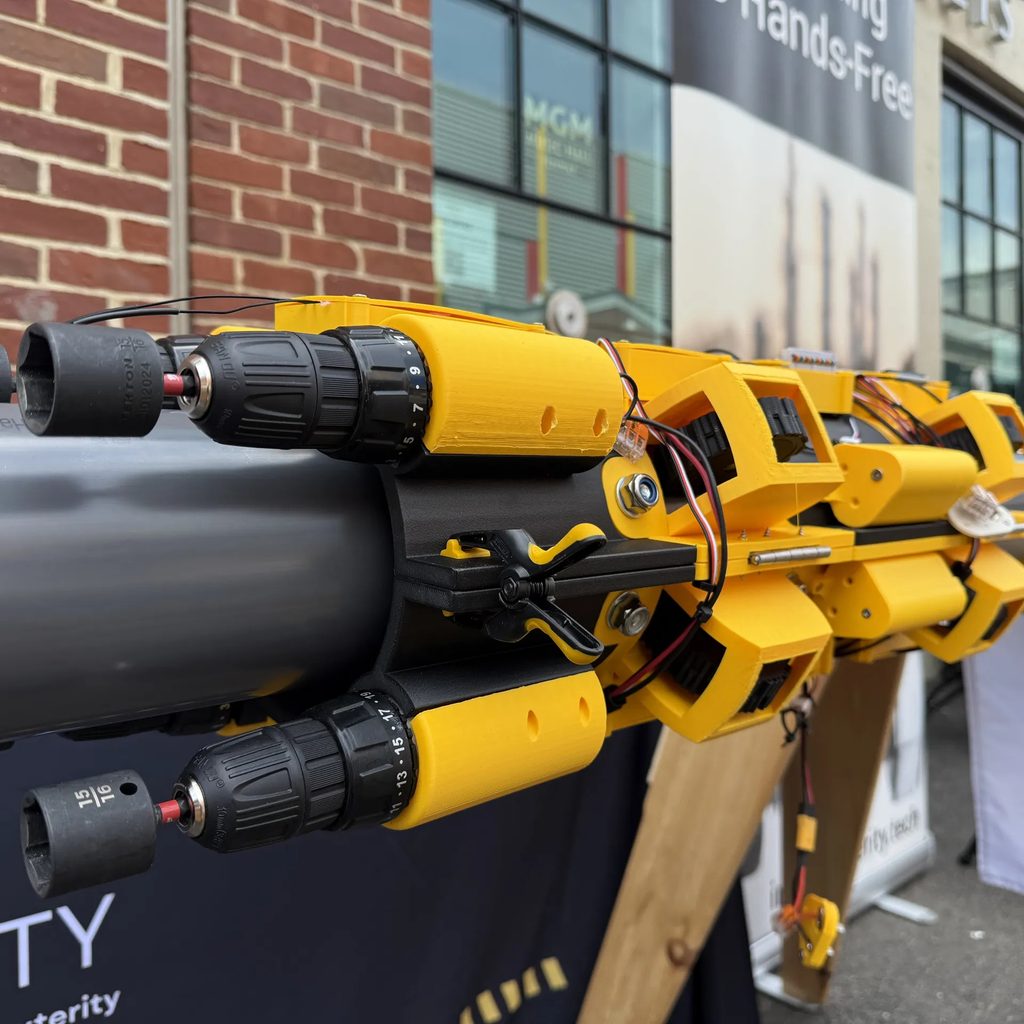
To do this, the company’s remote-controlled robot straps around a pipe and slides smoothly across it. In addition, it can tighten or loosen four bolts at once, cutting a grueling task down sharply. Meanwhile, the robot fits inside a Pelican case, so one worker can carry it anywhere. That portability matters because Nexterity treats the robot like rental construction equipment.
This approach could also make the technology easier for smaller contractors to adopt without making a large upfront investment. The robot’s remote-controlled design allows workers to operate it while reducing the physical strain associated with repetitive bolting. Ultimately, Nexterity aims to make pipefitting safer and more efficient while helping companies address ongoing labor shortages.
To meet different needs, Elliott built several robot configurations to match different standard pipe sizes. According to Elliott, most industrial pipes measure between two and eight inches wide. Therefore, she designed the robot around that narrow, highly repeatable range.
More importantly, Elliott believes the market opportunity stretches far beyond oil and gas pipelines. For example, water treatment plants, food and beverage facilities, and manufacturing sites all use similar piping. Consequently, she expects demand for automated bolting to grow quickly across industries.