Meta Introduces Muse, World’s First Personal AI Agent Built for Everyone
Quick Reads
- Meta launched Muse, its new personal AI agent, on September 8, 2026.
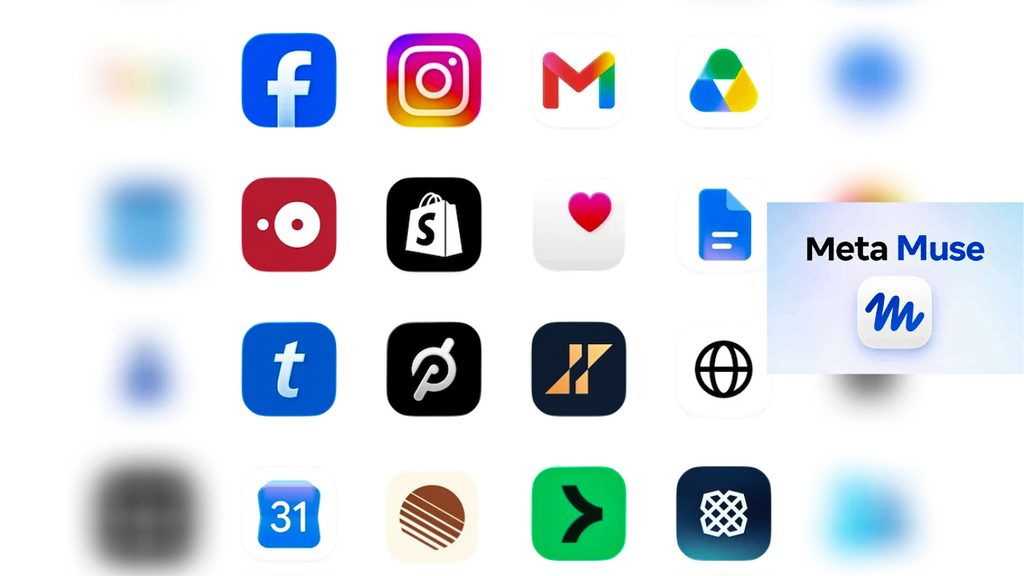
- Muse can browse the web, connect to your apps, complete multi-step tasks, and keep working in the background with your direction and oversight.
- It is currently available only in the United States for age 18+ on iOS, Android and Muse.ai.
- The free tier covers up to a 100million tokens per week. And there are $20 and $100 per month subscription plans for those who want to use it even more.
Meta has introduced Muse, a new personal AI agent designed to do more than answer questions.
The company unveiled Muse on September 8, 2026, describing it as the “world’s first personal AI Agent built for everyone.” Unlike traditional chatbots that mainly provide information, Muse designed to take action on behalf of users.
Users can ask Muse to perform tasks such as sending emails, booking travel, filling out forms, conducting research and helping manage larger projects.
It is free for up to a 100million tokens per week. And there are $20 and $100 per month subscription plans for those who want to use it even more.
Muse Can Keep Working
One of the key features of Muse is its ability to continue working even after a user closes the app.
However, the AI does not have unlimited control. If it reaches a step that requires permission, such as sending an email or making a purchase, Muse will stop and ask the user for approval before continuing.
The system is powered by Muse Spark, which Meta describes as its most capable AI model yet for handling tasks in the real world.
Security and Privacy
Meta says privacy and security are central to how Muse works.
The AI operates inside a secure virtual computer known as Muse Secure VM, which designed to keep the AI and a user’s connected data protected.
According to Mark Cornell, Muse product designed; Users also remain in control of what Muse can access. They can choose which apps the AI is connected to, decide what actions it is allowed to perform, disconnect apps and change permissions whenever they want.
Muse can also remember useful information shared by users. For example, if a user tells Muse that a friend has a particular dietary restriction, the AI could remember that information and use it when helping plan a dinner.
Muse Currently Limited to the U.S.
For now, Meta says Muse is available only in the United States for age 18+ on iOS, Android and Muse.ai. Support for Meta’s AI glasses also expected to arrive soon.
Meta has not provided a specific country-by-country explanation for the restriction. However, the company has highlighted its privacy and safety testing, including Sentinel, a system designed to monitor Muse’s actions and require approval for sensitive tasks.
The U.S. rollout therefore appears to serve as an early testing ground for Meta’s approach to highly autonomous personal AI before a broader expansion.
Overall, Meta is positioning Muse as a new kind of AI assistant one that does not simply tell users what to do, but can actually help get the work done.