Four Astronauts Just Flew Around the Moon and Back
Quick Reads
- Four astronauts aboard NASA’s Orion spacecraft named Integrity have safely splashed down in the Pacific Ocean off San Diego, completing a 10-day mission around the Moon.
- Artemis II is the first crewed mission to travel beyond low Earth orbit since Apollo 17 in 1972, more than 50 years ago.
- The crew broke the all-time human distance record from Earth, reaching 252,760 miles away, farther than any human being has ever travelled from our planet.
- The mission was a test flight, not a Moon landing, but it cleared the way for Artemis III to attempt a crewed lunar landing near the Moon’s south pole in 2028.
- NASA’s Lunar Gateway space station programme was cancelled in March 2026, raising questions about the long-term shape of humanity’s return to the Moon.
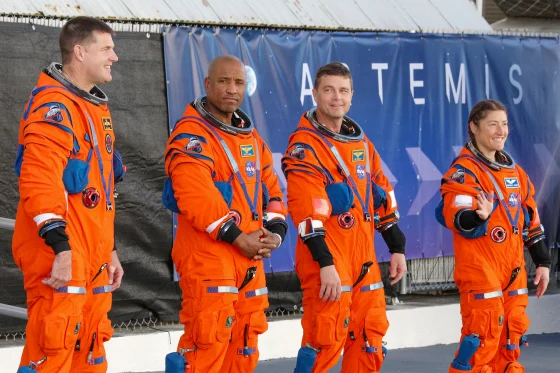
After 10 days in space, the four astronauts aboard the Orion spacecraft splashed down in the Pacific Ocean off the coast of San Diego, California, with NASA declaring the landing “perfect.” All crew members, Commander Reid Wiseman, pilot Victor Glover, and mission specialists Christina Koch and Jeremy Hansen, were confirmed safe and in good health.
It was not just a successful return. Artemis II was the first crewed flight beyond low Earth orbit since Apollo 17 in 1972, marking the first time in more than half a century that human beings have ventured toward the Moon.
The mission produced moments that will be remembered far beyond the space community. The crew broke Apollo 13’s distance record and reached 252,756 miles from Earth, the farthest any human being has ever travelled from our planet. They also witnessed a total solar eclipse from beyond the Moon, the Moon blocking the Sun for a full 54 minutes, something impossible to see from Earth, with pilot Victor Glover describing it as “unreal.”
NASA administrator Jared Isaacman called it “a perfect mission,” saying the crew were “the ambassadors to the stars” and writing on X that “America is back in the business of sending astronauts to the Moon and bringing them home safely.” The mission also carried real technical stakes. All eyes were on Orion’s heat shield, which had to withstand thousands of degrees during reentry, a critical concern after the shield on the uncrewed 2022 test flight returned looking heavily damaged. It held. The capsule slowed from nearly 25,000 miles per hour to a 19 mph splashdown, pulled back to Earth by parachutes.
But what comes next is where the story gets complicated. Under the revised Artemis programme, next year’s Artemis III will see astronauts practice docking with a lunar lander in Earth orbit, while Artemis IV will attempt to land a crew near the Moon’s south pole in 2028.
However, NASA’s Lunar Gateway space station programme, originally designed to serve as an orbital outpost around the Moon, was cancelled in March 2026, leaving gaps in the long-term plan for a sustained human presence there. For Africa and the developing world, the significance goes beyond flags and footprints. A sustainable Moon presence would open up satellite infrastructure, space-based solar energy, and new materials science, technologies that could eventually narrow the digital and energy gaps that still define life on this continent.