Britain Forces Three Russian Submarines Out of Its Waters After Month-Long Standoff
Quick Reads
- Britain’s Defence Secretary John Healey announced on Thursday, April 9, that the UK military deployed a Royal Navy frigate and an RAF P-8 maritime patrol aircraft to track three Russian submarines that had been lurking in and around British waters for over a month.
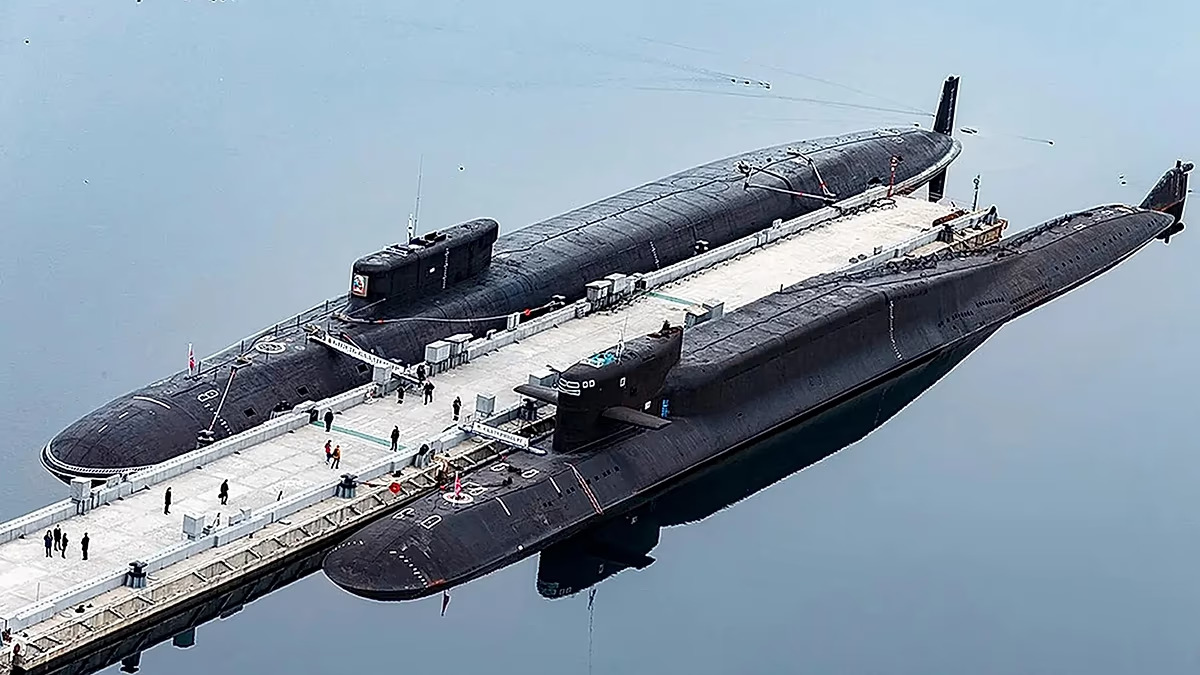
- The Russian fleet included one Akula-class nuclear-powered attack submarine and two specialist deep-sea research vessels from GUGI, Russia’s Main Directorate for Deep-Sea Research, built to survey and ultimately sabotage undersea cables and pipelines.
- London accused Moscow of deliberately timing the covert mission to coincide with the world’s attention being fixed on the war in the Middle East.
- Norway confirmed it deployed its own frigate and P-8 aircraft alongside British forces; all three Russian submarines have since withdrawn from the area.
- Britain responded by announcing an additional £100 million for submarine-hunting aircraft and launching the Atlantic Bastion programme, a dedicated naval force to defend undersea infrastructure in the North Atlantic.
Britain’s military has driven three Russian submarines out of its waters following a covert operation that lasted more than a month, the UK government disclosed on Thursday, April 9, 2026. Defence Secretary John Healey made the announcement in a formal statement at 9 Downing Street, revealing that Royal Navy and Royal Air Force assets had tracked the vessels around the clock until they retreated.
The Russian deployment consisted of one Akula-class nuclear attack submarine and two GUGI specialist vessels designed, in Healey’s own words, to “survey underwater infrastructure during peacetime, and sabotage it in conflict.” The UK Ministry of Defence identified GUGI as a unit directed by President Vladimir Putin to conduct hybrid warfare specifically targeting critical undersea infrastructure. Healey said the submarines had not entered British territorial waters but had been operating within the country’s Exclusive Economic Zone and the waters of British allies. No damage to cables or pipelines was confirmed, though the UK stated that verification is still ongoing.
Norway confirmed its role in the joint operation, with Defence Minister Tore Sandvik stating that the Russian activity took place in and near both Norwegian and British maritime areas. Both governments attributed the operation to GUGI and said it reflected Russia’s accelerating efforts to map and potentially disable Western undersea infrastructure. London accused Moscow of timing the mission to exploit the global distraction of the Middle East conflict, with Healey stating directly: “Putin would want us to be distracted by the Middle East. We will not take our eyes off Putin.” His warning to the Kremlin was blunt, “we see your activity over our cables and our pipelines and you should know that any attempt to damage them will not be tolerated and will have serious consequences.”
In direct response to the growing threat, Britain announced an extra £100 million for its P-8 submarine-hunting aircraft fleet and unveiled the Atlantic Bastion programme, a new hybrid naval force combining autonomous systems with warships and aircraft dedicated to protecting the UK’s undersea cables and pipelines. Healey framed it as part of the largest sustained increase in UK defence spending since the end of the Cold War.