Simplexity Robotics Secures New $100m Boost from Ant Group
Quick Reads
- Simplexity Robotics has raised $100 million in a pre-Series A round led by Jack Ma-backed Ant Group.
- The round values the Chinese physical AI startup at $1.6 billion.
- Tencent Holdings, HSG and Lanchi Ventures also joined the round.
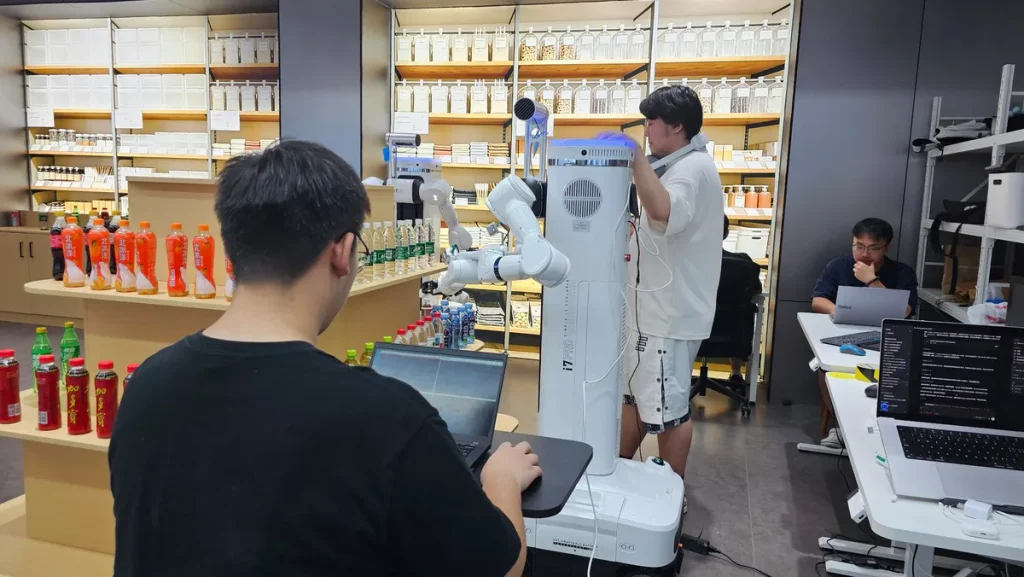
- Simplexity unveiled iX, its second humanoid, which serves drinks, fetches items and leads guided tours.
- China accounted for 97% of humanoid robots shipped in the first three quarters of 2026.
Chinese physical AI startup Simplexity Robotics has raised $100 million in a funding round led by Ant Group. The pre-Series A round values the company at $1.6 billion, according to chairman and co-founder Wang Kai, who spoke to Bloomberg. Meanwhile, existing investors Tencent Holdings, HSG and Lanchi Ventures also joined the round, TechNode reports. With this investment, Jack Ma-backed Ant Group now adds Simplexity to its growing robotics portfolio, which already includes Unitree, Astribot and Zeroth.
Three major factors explain why the deal matters. First, China already dominates the humanoid robotics industry. In fact, Chinese firms accounted for 97% of humanoid robots shipped in the first three quarters of 2026, according to Business Standard’s Bloomberg report. However, despite the country’s strong position in the industry, its economic planning body recently warned of a potential bubble in the sector.
Second, Simplexity Robotics already has early customers, demonstrating that its technology is attracting interest beyond investors. These customers include Korean startup Rlwrld, Tsinghua University and forklift maker Hangcha Group. Furthermore, the startup unveiled its second humanoid, a wheeled machine called iX, on Monday. The robot can prepare and serve drinks, fetch items and lead guided tours. By comparison, its first humanoid is designed to operate CNC machines in factories.
Wang explained that the factory automation market presents a significant opportunity. According to him, China has 3 million CNC machines, while the average operator is 45 years old. Moreover, few young workers want to take up these jobs, making automation increasingly important.
Third, the team has control over its own technology. Unlike companies that depend heavily on external developers, Simplexity designs both its hardware and software and builds its entire software stack in-house. Additionally, former Li Auto executives founded the startup, which surpassed a $1 billion valuation within months.
Wang believes robots will eventually become indispensable as China’s workforce shrinks and labour costs rise. “Our robots target the work that people don’t want to do,” he said.
Finally, Wang also sees China’s fierce competition as an advantage rather than a disadvantage. He argues that surviving in the demanding domestic market will prepare the company to secure bigger margins abroad. Ultimately, Simplexity Robotics hopes to build the breakout app of embodied AI, he said.